In most enterprises, HR work slows down in the same places: employee records split across spreadsheets, approvals routed through email, and reports that begin with reconciling three versions of the same headcount. As organizations add locations, entities, and worker types, that manual load grows faster than the HR team does. A cloud-based HR system addresses the problem at its source. It keeps one hosted record of every employee, updated once and available to HR, managers, and employees wherever they work. This guide explains how it works, the features that matter, and how to choose one.
What is a cloud-based HR system?
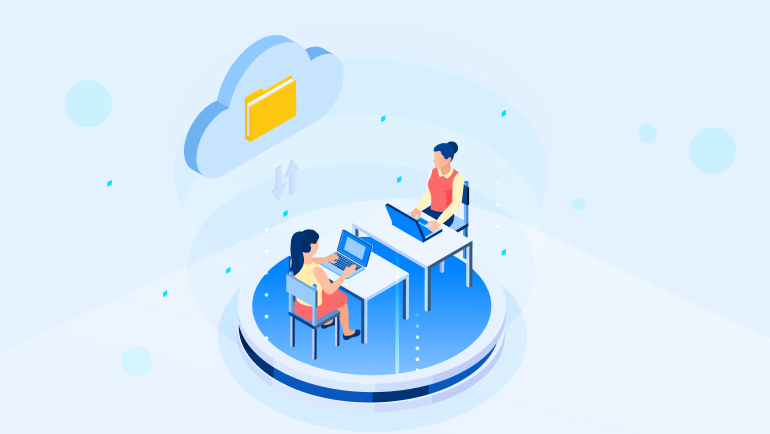
A cloud-based HR system is software that stores employee data and automates HR processes such as onboarding, leave, performance, and reporting. It is hosted by a vendor on remote servers and accessed through a web browser or mobile app. The vendor manages infrastructure, security, and updates, and organizations use it as a subscription service.
Why do businesses need a cloud-based HR system?
A cloud-based HR system, often referred to as an HRMS or HRIS, gives HR a centralized platform for managing its work. It makes HR functions quicker, easier, and more effective to run.
From onboarding to succession planning, cloud-based systems help HR make informed decisions about the employee experience. They support more refined recruitment processes, better training, and collaboration through shared tools and networks. Here is why they matter:
1. Versatility in functionality
Some cloud HR systems focus on a specific HR function, such as payroll or recruitment. The stronger choice is a system that covers every stage of the employee lifecycle, so organizations can manage everything from payroll to training in one place and save time and effort.
2. Modern HR demands
As workforce dynamics and legal requirements change, businesses increasingly recognize the role HR plays in controlling costs and driving overall performance. Absenteeism and skill gaps add pressure on HR operations, which makes a cloud-based system that spans the full lifecycle a critical asset.
How does a cloud-based HR system work?
A cloud-based HR system follows a simple sequence. Each step depends on the one before it, so the quality of data captured at the start decides how useful the insights are at the end.
Data is stored in one central record. Employee profiles, job details, reporting lines, and policies sit in a single cloud database that the vendor maintains, with encryption and regular backups.
Users access it through the web or mobile. HR teams, managers, and employees sign in from any device. Role-based permissions decide what each person can view and change.
Workflows run automatically. When an employee submits a leave request or updates an address, the system routes it to the right approver, applies the relevant policy, and records the change.
Data is processed into reports and insights. Because every transaction lands in the same record, dashboards on headcount, attrition, and attendance reflect current information instead of last month's export.
Key features of a cloud-based HR system
Feature sets vary by vendor, but five capabilities form the core of most cloud-based HR systems. Each is worth judging by the outcome it produces.
Employee self-service: Employees update personal details, apply for leave, and look up policies on their own, which reduces the volume of routine queries reaching HR.
Performance management: Managers set goals, give ongoing feedback, and run reviews in one place, building a performance history that informs promotion and development decisions.
Time & attendance: Attendance, shifts, overtime, and time-off requests are captured digitally and checked against policy, which cuts disputes and manual corrections.
Analytics and reporting: Real-time dashboards track headcount, attrition, and absence, so leaders act on current data instead of waiting for a monthly report.
Mobile accessibility: Frontline and remote employees complete HR tasks from a phone, which matters most where a large share of the workforce never sits at a desk.
What are the benefits of cloud-based HR systems?
A cloud-based HR system changes how much effort HR work takes and who can act on HR data. These are its main benefits.
1. Time-saving mechanisms
Cloud-based HR systems automate the repetitive work that consumes HR capacity, including routing approvals, tracking hours, sending reminders, and updating records. Automation also removes the manual re-entry where most data errors begin.
2. Redefined HR roles
When tasks that once took hours take minutes, HR teams can redirect their time to work that needs judgment. That includes workforce planning, people analytics, and leading organizational change.
3. Enhanced accessibility and mobility
HR teams, managers, and employees can reach the system from any location with an internet connection. Teams in different offices work from the same information, and employees can view and update their own details without raising a request.
4. Paperless efficiency
Employee documents, contracts, and policy acknowledgments are stored digitally within the system, with access controls and audit trails. Finding a file takes seconds, and records no longer depend on a physical office or filing cabinet.
5. Scalability and expansion
As an organization grows, adding employees, entities, locations, or modules becomes a configuration change rather than an infrastructure project. The system expands with the business without a new deployment.
6. Predictive analysis with AI
With employee data in one place, AI models can spot the patterns that tend to precede attrition or disengagement, such as stalled career progression or falling participation in reviews. HR can act on those signals before they turn into resignations and productivity losses.
7. Stronger data security
Cloud vendors invest in encryption in transit and at rest, access controls, regular backups, and independent audits at a level most organizations would struggle to fund for an on-premises system. Security certifications also give HR and IT a verifiable standard to evaluate.
8. Cost efficiency
Subscription pricing replaces large upfront license and hardware costs. The vendor handles deployment, maintenance, and upgrades, which keeps spending predictable and removes the need for periodic upgrade projects.
9. Technology without infrastructure overhead
There are no servers to buy, patch, or replace, and no in-house team is needed to keep the HR system running. IT effort shifts from maintenance to integration and access control.
10. Higher employee productivity
Reminders, automated workflows, and searchable knowledge bases let employees complete HR tasks on the go. Fewer email chains and in-person follow-ups mean less time lost for employees and managers.
Key factors to consider when choosing a cloud-based HR system
Most cloud-based HR systems cover the same core features. The differences that decide long-term value show up in these areas.
1. Configurability without engineering
Policies, approval chains, and forms change often. Check whether HR can make these changes through configuration, or whether each one needs a vendor ticket or developer time.
2. Compliance and data privacy
The system should support privacy rules where you operate, such as GDPR in Europe and the CCPA in California, along with local labor requirements. Ask how regulatory updates are delivered and where data is stored.
3. Security credentials
Request independent certifications such as ISO/IEC 27001 and SOC 2 reports. Confirm role-based access, multi-factor authentication, encryption, and audit logs.
4. AI that works within clear limits
Look for AI and automation to streamline HR processes that act only within each user's permissions and keep a record of every action taken.
5. Integration and interoperability
Review pre-built connectors and open APIs for finance, IT, and collaboration tools. Ask, too, whether the system can work with the AI agents your enterprise already uses.
6. Adoption across the workforce
Test the mobile experience, language support, and ease of use with frontline employees, not only with the HR team.
7. Multi-entity structure
If you operate across several legal entities or countries, confirm the system handles separate policies, currencies, and reporting within one employee record.
8. Implementation and total cost
Ask references of a similar size about their go-live timelines, and compare total cost of ownership over five years instead of license fees alone.
Conclusion
A cloud-based HR system replaces scattered records and manual approvals with one hosted record that HR, managers, and employees work from in real time. Its benefits follow from that design: less administrative work, current reporting, stronger security, and a platform that grows with the organization. Choosing well comes down to configurability, compliance, adoption, and how cleanly the system connects to the rest of the enterprise.
Darwinbox is an AI-native HR system used by more than 1,200 enterprises across more than 130 countries, covering nearly 5 million employees. It has been named a Gartner Peer Insights Customers' Choice for Cloud HCM Suites four years in a row. To see how it can support your organization, schedule a demo with our team.
FAQs
What are cloud-based HR systems?
Cloud-based HR systems are online platforms that store employee data and automate HR processes. Hosted by a vendor and accessed through a browser or mobile app, they cover functions from onboarding and leave to performance management and reporting.
What is a cloud-based payroll system?
A cloud-based payroll system is an online platform that calculates and distributes employee pay, applies tax and statutory deductions, and produces payslips. It often connects to a cloud HR system so payroll draws on the same employee data.
Which HR cloud platform is best?
The right platform depends on your size, regions, and workforce mix. Darwinbox, an AI-native HCM platform, has been a Gartner Peer Insights Customers' Choice four years in a row, with 93% of reviewers willing to recommend it (2025).
Why are cloud-based HR systems important?
They give HR one current record of the workforce and automate routine processes. That frees HR capacity for planning and talent work, and gives leaders reliable data for decisions on hiring, retention, and workforce cost.
What makes cloud-based HR software different from traditional systems?
Traditional systems run on servers the organization owns and maintains, with periodic manual upgrades. Cloud-based software is hosted and updated by the vendor, accessed from any device, and paid for through a subscription instead of upfront licenses.
How does a cloud-based HR system improve HR efficiency?
It automates approvals, reminders, and record updates, and lets employees handle routine requests through self-service. Data is entered once and shared across processes, so HR spends less time on re-entry, reconciliation, and repeat queries.
Is a cloud-based HR system secure for managing employee data?
It is when the vendor uses encryption, role-based access, multi-factor authentication, and audit logs, and holds independent certifications such as ISO/IEC 27001 and SOC 2. Review these credentials during evaluation.
How can cloud HR software improve your remote workforce management?
Remote employees can update records, request leave, log time, and complete reviews from any device. Managers approve requests and track attendance from anywhere, and HR sees the entire distributed workforce in one place.
How long does it take to migrate from on-premise HR software to the cloud?
It depends on scope, data quality, and integrations. In G2's 2026 analysis of Core HR reviews, 70% of enterprise buyers went live within three months, while 16% took more than six months.