Key Takeaways
A successful payroll management lays the foundation for a compliant and progressive enterprise.
Regular payroll review allows businesses to identify and resolve errors early, helping them stay proactive.
As technology continues to evolve, it is essential for businesses to adopt new tools and software to improve efficiency, productivity, and communication.
A cloud-based application, Darwinbox, provides an AI system that can be used to automate and simplify a vast number of payroll tasks.
The software offers fact-based information, saves on manpower and enhances decision-making in HR operations.
Payroll audits help prevent costly financial inaccuracies and ensure regulatory compliance. When businesses fail to audit their payroll, mistakes can slip through the cracks and affect several aspects of the business. Businesses can get hit with compliance penalties if they file the wrong taxes or calculate wages incorrectly and violate labor laws. Discrepancies in employee payment can cause trust issues among employees and can hurt morale and retention. Additionally, company resources can be lost through payment errors such as overpayment, duplicate payments, and payments to ghost employees. When HR and finance teams spend time fixing mistakes, operational inefficiencies increase and productivity decreases.
A payroll audit can have many positive effects, reflecting the reliability, integrity, and future readiness of an organisation. A survey by Deloitte found that companies leveraging advanced payroll software experienced a 30% increase in employee satisfaction.
This article aims to help you understand what a payroll audit is, what its purpose is, and the best practices for doing so effectively.
What Is a Payroll Audit?
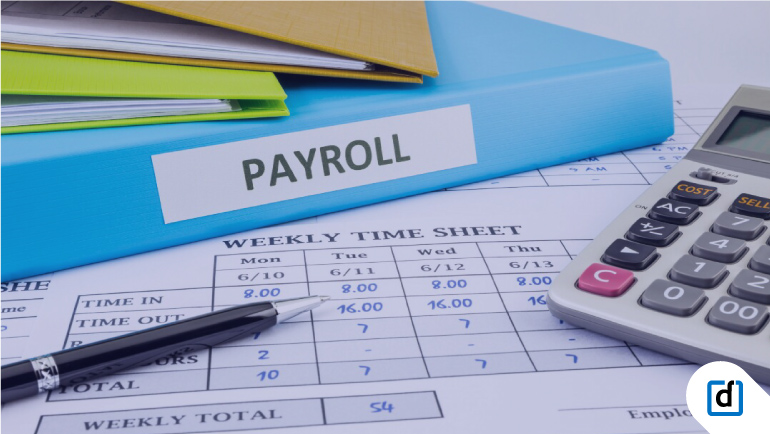
A payroll audit aims to investigate all your payroll records and ensure that everyone is paid correctly, deductions are in accordance with laid-down regulations, reports are accurate, and details are up to date. The purpose of this exercise is to identify errors or anything out of place before they snowball into a bigger issue. Conducting these audits, whether every month or quarterly, helps organisations avoid accidental errors, compliance issues, and fines. So, it's really about staying ahead and keeping everything clean and legal.
Payroll audits are a precautionary measure designed to prevent unintentional violations and mistakes, as well as potential penalties, whether they are carried out quarterly, annually, or ahead of a statutory audit.
How to Audit Payroll in 7 Steps
The payroll compliance audit process is systematic and comprises several steps. The following simple breakdown outlines the steps required to thoroughly evaluate your payroll function:
Step 1 – Define your audit timeline
Defining an audit timeline is crucial for financial integrity and operational efficiency. Payroll automation tools help organisations streamline processes and meet tight deadlines.
Step 2 – Collect payroll records and documentation
Begin by gathering all documents pertaining to a defined audit period (e.g., a financial year). If you are using a digital payroll management system, getting these records is easy.
Employee forms and records (offer letter, contracts, payslips)
Payroll registers
Statutory deductions (PF, ESIC, PT, TDS, LWF)
Timesheets and attendance logs
Proof of overtime, bonuses, and paid time off.
Step 3 – Verify employee details
Ensure that all employee records are up-to-date and accurate, including personal records, tax information, and pay rates. This step is particularly crucial for global payroll systems operating across varied geographies.
Step 4 – Confirm pay rates, hours worked, and total wages
Tally recorded hours and salaries against contract or HR system details. Specifically, ensure that the hourly rates, overtime pay, bonuses, and paid time off match the contract or HR records.
Step 5 – Review tax withholdings and deductions
Verify federal, state, and local payroll taxes and ensure they have been correctly withheld and reported. Validate deductions for benefits, retirement plans, and garnishments.
Step 6 – Compare payroll to financial records
Cross-check your payroll reports with your general ledger or payroll software. This helps to confirm that payroll expenses align with financial reports and reveal any inconsistencies between systems.
Step 7 – Document findings and correct errors
Monitor any problems you spot and ensure that you take immediate steps against them.
Keep a close note of the audit process and your corrections. The information can be used as a reference during an audit in the future or in case you are audited by an external agency.
When Should Organisations Conduct Payroll Audits?
There is no strict rule for how frequently to audit payroll. Audit frequency should align with how often organisations compute entitlements and process corrections.
For example:
Weekly or biweekly: Audit every 15 days (depending on how frequently payroll is run).
Monthly pay: Audit monthly if your payroll cycle is 28 days
Enterprise Agreements or awards: Monthly audits with quarterly and yearly reconciliations
Other instances in which it would be reasonable to carry out a payroll audit would be:
Prior to or following the adoption of new payroll software.
Mergers between the companies or changes in the organisation.
International diversification.
Where there are more payroll mistakes or grievances raised by employees.
Financial audit or internal compliance.
Payroll Audit Checklist for HR Teams
An internal payroll audit checklist includes all the main areas that you need to examine to fully evaluate the performance and effectiveness of your payroll management. This checklist saves you from the time-consuming process of starting from scratch.
| Audit Area | What to Check |
|---|---|
| Employee records | Correct job role and status, employee classification |
| Attendance records | Payroll hours calculation (time spent working, and paid time off) |
| Payroll calculations | Salary benchmarks, wages, overtime, bonuses |
| Tax deductions | Verify Forms 940, 941, W-2, W-3, and verify timely submission |
| Discrepancies | Investigate irregularities and take corrective actions |
| Compliance | Labor law and payroll regulations |
This checklist serves as a guideline, and the areas that need to be evaluated will vary depending on the company's size, industry, and risk profile.
How Modern HR Platforms Simplify Payroll Audits
During the early days of HR technology adoption, it was seen as being the same as automation. HR teams relied heavily on tools like Applicant Tracking Systems (ATS) and payroll software to handle routine tasks. It was a significant leap forward, but it was still just the beginning.
As technology advanced, the narrative shifted from simple automation to strategic partnership. Today's HR tech landscape is dominated by intelligent solutions powered by AI and data analytics. Platforms like Darwinbox exemplify this shift, especially in payroll management. These AI-powered payroll platforms don't just process payments—they analyse vast amounts of payroll data to generate actionable insights.
Streamline Payroll Accuracy with Darwinbox
The use of manual reconciliation and verification allows the possibility of errors, which may cause high financial losses.
These problems amplify with the growth of business, especially when it is entering new places. The current payroll systems in the market need to be upgraded to meet the evolving needs of the large enterprises, since payroll has remained complex and leakages in payroll administration persist. According to a report by Deloitte, automated payroll processing can reduce up to 50 per cent of errors and reduce processing time by a quarter.
With Darwinbox, organisations can now consolidate all payroll operations into a single system and dashboard. The agile payroll platform streamlines processes across geographies and involves all stakeholders.
Darwinbox's enhanced payroll solution offers the following:
Automated Data Flows
In-the-Flow Reconciliation
E-Verification for 100% digital payroll
Robust Control and Compliance
With a decade of experience supporting international teams, Darwinbox embodies a governance-first mindset in every solution we deliver. Having a comprehensive knowledge of cloud-based HR technology means that payroll management is done with diligence, structure and a keen eye on risk first-hand. Schedule a demo today and experience the future of compliant, transparent, and efficient payroll management.
FAQs
What are the 3 main types of payroll audits?
The three main types of payroll compliance audits are internal, external, and compliance/regulatory audits. An internal payroll audit is performed by the in-house HR or finance teams. An external audit, on the other hand, is an objective assessment of payroll processes conducted by an external agency.
What are the benefits of payroll audits?
Regular payroll audits are crucial for ensuring a well-functioning compensation & benefits (C&B) system. They safeguard your business from financial and legal risks associated with payroll errors and non-compliance with regulations.
How long does a payroll audit take?
The time taken for a payroll audit can range from a few minutes to a few weeks to complete. Ultimately, it depends on the number of employees and the amount of data being analysed.
What is a payroll register, and how do you use one?
A payroll register is a document that records the details of employees' pay cheques over a specific period. It provides a comprehensive overview of each employee's earnings and deductions, ensuring transparency and accuracy.
References