The global workforce is at a turning point. The year 2025 will be a pivotal year in how organizations identify, develop, and retain their talent. Leaders from various sectors are changing the way people grow within companies. They are shifting from conventional hiring cycles towards continuous AI-driven talent development.
This change will see companies prioritizing agility, personalization, and data-led decision-making in their efforts to cater to the needs of a hybrid and distributed workforce. According to Darwinbox’s Talent Management Report, 2025, around 60% of future jobs can be filled internally if employees are strategically developed.
AI-powered talent platforms analyze skill requirements across thousands of roles and predict attrition with high accuracy. All this helps HR teams in reducing their manual work, broadening their view, and delivering growth experiences that are personal. Such an evolution creates a competitive advantage during a period of rapid change in workplaces.
The Talent Management Report: The New Blueprint for HR Leadership is an HR report with data-supported insights and practical frameworks to assist HR leaders in this evolution. Corporations that want to leverage their talent strategy can understand and implement these implications as a necessary part of their strategy.
Why the Talent Equation Has Changed?
The traditional HR strategies that once brought success are not working anymore. Increasing the workforce does not close the gaps in capability, and simply giving salary increments does not guarantee loyalty. The coming time belongs to organizations that can train employees internally and integrate talent with business strategy.
According to the New Blueprint for Talent Management data, around 50% of HR leaders who want to take a skills-first approach have not yet taken any action toward it. Companies that effectively manage internal mobility show an increase of 18-20% in the average tenure of employees. This improvement often extends the employee lifecycle for more than five years. Most of the legacy systems, however, were designed to track performance, not to develop capabilities. They track activity, not capability.
The workforce of today demands greater insight, openness, and definite routes for progression. Achieving this requires a modern infrastructure that connects skills, roles, and learning through smart analytics. This shift marks a move from process-based HR to performance-driven, skill-linked HR ecosystems.
The Barriers to Transformation
Even a highly progressive HR department will encounter resistance when changing its talent models. The New Blueprint for Talent Management outlines the obstacles that come in the way of such a change:
Rocky Foundations
The isolation of HR systems in silos leads to a deployment period of 12-24 months, and the systems themselves seldom adjust to business changes. Meanwhile, agile, AI-powered models are gaining preference because they deliver value faster, typically within a year, and adapt easily to change.
Rigid Adoption
Around 60% of employees say they are not provided with sufficient coaching for their skill development. The main reason for adoption failure is that people view the systems as administrative tools rather than enablers, instead of seeing them as facilitators. Engagement can be increased only when people understand the benefits they will get personally.
Fragmented Optimization
The report highlights that nearly 70% of HR leaders state that their data infrastructure cannot keep up with business speed. Lack of a unified view makes HR decisions reactive. With connected intelligence from modern systems, there is now a single, consolidated view of talent that can change as rapidly as the organization.
The barriers addressed here reflect a bigger reality. Transformation failure is not due to a lack of ambitious goals. It often stems from poor alignment between people, process, and platform.
A Smarter Blueprint for Talent Growth
Darwinbox created the Talent Growth Blueprint to establish the frameworks that connect the different stages of the people lifecycle from setup to optimization for solving these problems.
Setup → Drive → Optimize
Setup: Build a strong, scalable structure that clearly defines and maps every skill, role, and career path. Typically, customers of Darwinbox can go live in four to eight weeks and realize the return on their investment within a year.
Drive: Help employees become the drivers of their growth with tools such as AI-curated learning paths, and ensure they see a clear path of career progression.
Optimize: Leverage predictive analytics that help you align people strategies with business goals, anticipate skill shortages, and support your succession pipelines.
According to the report, this model has been the driving force behind over 1,000 enterprises located in more than 130 countries. It is proof that organizations evolve faster if HR, data, and strategy work together.
Agile Setup: Building the Foundation
Traditional HR systems are typically made up of multiple complex modules, have a lengthy configuration process, and offer only limited flexibility; so they often fail. Darwinbox changes this stage through its agility and smart features.
The Agile Setup framework accelerates company-specific adjustments and personalization efforts. This means interventions can now be completed in weeks, not years. It succeeds with:
Skills Ontology: Over 40,000 skills spread across 70 domains, thus creating a constantly updating map of competences.
AI-driven Role Mapping: The roles in the organization become structure-based and can change over time with the organization in real-time.
Configurable Architecture: The best of both worlds - local flexibility and global scalability.
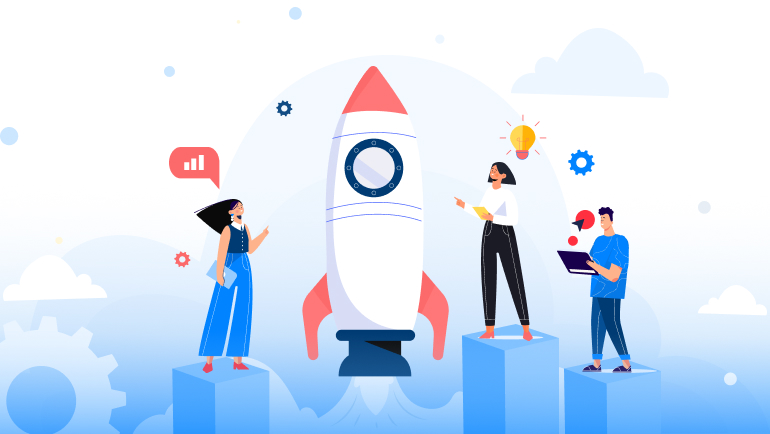
This method takes the transformation that was once an internal project to a strategic launchpad for growth.
Driving Adoption: Empowering People to Grow
New technologies by themselves are not an answer to talent transformation issues; the main agents are still people. The main point of an implementation is reached only when people find the system user-friendly and outcomes-driven.
Through Darwinbox’s Talent Hub and Manager Hub, employees can now easily discover their current skill gaps and explore their career aspirations. They can then follow personalized learning paths that clearly show how to progress in their chosen direction. Managers get the chance to support growth based on actual data and through real interaction with employees.
The report highlights how enterprises adopting this approach saw 85% system adoption and stronger engagement within the first year. When people own their growth journey, organizational performance follows.
Continuous Optimization Making Strategy Dynamic
Growth will not be limited to just adoption levels. Continuous optimization is what will guarantee that HR strategies remain in line with the changing business priorities.
Darwinbox’s AI analytics engine changes the data into foresight, helping HR heads to:
Monitor the readiness of the skills and workforce gaps on a 24/7 basis.
Come up with 5 potential successors per role of the key positions.
Access skill data at all times, as 60% of employees update their profiles annually.
Obtain quick and easy insight-led decisions through executive dashboards.
The report states that with the help of Darwinbox Sense and MCP Server (2025), HR leaders are able to use secure, real-time AI agents to make predictive and adaptive talent decisions. This helps in transforming HR from a reactive function into a proactive one.
Case in Point: Talent Velocity in Action
One global enterprise implemented the Talent Growth Blueprint across 20,000 employees, achieving:
Within six months, 95% of employees were on board with the plan.
External hiring expenses were cut by 20%
Within the first year, ROI was visible.
The company created the internal momentum to achieve its goals by personally connecting AI-driven career architecture with employee goals. This is what Darwinbox calls Talent Velocity, the rate at which growth accelerates through the alignment of people, data, and systems. This alignment helps organizations move from static workforce models to dynamic, growth-ready ecosystems where talent development directly fuels business agility.
The Future Belongs to Skill-First Enterprises
The talent race is now more than ever about hiring faster. Enterprises that focus on nurturing the internal capabilities of their employees will be the ones to rule the future of work.
Talent Management: The New Blueprint reveals that internally developing employees leads to longer tenure, stronger engagement, and measurable business resilience. AI acts as the enabler, while a skills-first mindset drives transformation.
Darwinbox Talent Management brings together the skills, the analytics, and the experience to form one interconnected ecosystem. The result is straightforward: employees are empowered, and growth becomes scalable.
To learn more about how AI-driven platforms are transforming talent management, check out Darwinbox's Future-Ready Playbook for Talent Management in the AI Era. This eBook offers actionable insights and frameworks that help organizations build a future-ready workforce.