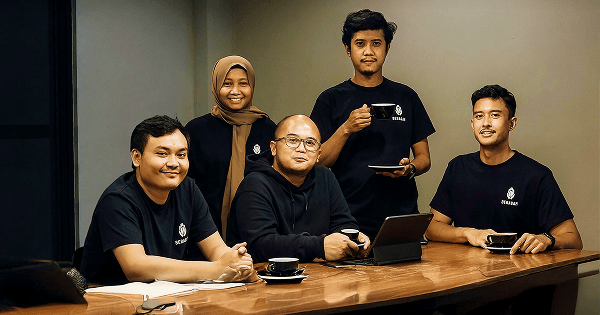
In Indonesia's dynamic food and beverage landscape, PT Makna Angan Karya Andanu (MAKA) has established itself as a prominent multi-brand operator, managing beloved brands including Futago, Toodz House, Toho Cafe, Beragam and its flagship coffee brand, Kopi TUKU. Established in 2017 with a mission to grow Indonesia's culinary culture through brands built on quality, sustainability and local resources, MAKA has grown from a handful of outlets into a multi-brand group with thousands of employees across retail stores, cafes and corporate offices. As its portfolio expanded across multiple business units and locations, the company reached a critical inflection point: its manual, paper-based HR processes were struggling to keep pace with rapid organizational growth.
The Challenge
Before the transformation, MAKA's HR function was anchored in manual execution. Operational at a basic level, this approach introduced systemic inefficiencies that became increasingly pronounced as the organization grew across a diverse employee base of part-time baristas, restaurant staff, corporate functions and logistics teams. Five operational challenges stood out.
- Administrative overhead from paper-based processes.
Leave applications, attendance logs and performance evaluations were tracked manually and stored in folders and filing cabinets, creating bottlenecks and error-prone procedures. - Lack of real-time visibility.
Payroll, time attendance and employee movements were not tracked in real time, making fast decisions and accurate scheduling difficult. - Data fragmentation.
Employee histories, documentation and contract details existed in scattered formats, making it hard to retrieve information quickly or support analytical decision-making. - Disjointed workflows.
Approval flows and request processing were unintegrated, resulting in delays and inconsistent tracking of HR activities. - Communication gaps.
Store employees, part-timers and corporate staff often missed timely updates due to the absence of a centralized messaging platform.
The Implementation
To position HR as a strategic enabler of growth, MAKA chose Darwinbox, a cloud-native, AI-first, integrated HCM platform, to shift from administrative HR to a data-enabled people operating model across Core HR, Time & Attendance, Travel, Pulse, Performance Management and Custom Workflows. The implementation rested on five pillars.
- Digitization of core HR processes.
Digital leave management, time and attendance tracking, reporting and employee data storage replaced paper-centric workflows, with all workforce information consolidated from disparate spreadsheets into one centralized, searchable platform. - Real-time workforce data and attendance.
Real-time clock-in and clock-out gave managers immediate visibility across all locations, improving store scheduling, labor-cost accuracy and proactive responses to absenteeism and shift coverage. - Centralized documentation and record management.
Hardcopy files, from finance-linked records to employee contracts, were migrated into a secure, searchable repository, reducing lost and misfiled files and simplifying audits, verification and onboarding checks. - Data-driven HR reporting.
Standardized, scheduled reporting gave HR leaders visibility into headcount and attrition, attendance trends, leave utilization and performance summaries, replacing hours of ad-hoc spreadsheet work. - Employee engagement through Pulse surveys.
Pulse replaced scattered sharing through informal messaging groups with a centralized platform for structured, consistent news, announcements and updates.
The Impact
The deployment of Darwinbox delivered measurable operational improvements, elevated internal engagement and laid a robust foundation for MAKA's continuous growth, spanning operational efficiency, strategic insight and experience.
- Enhanced confidence in HR data.
A central source of truth removed reliance on manual validation, improving data accuracy and enabling better planning and decision-making. - Faster operational decisions.
Real-time data and automated reporting shortened decision cycles, from scheduling staff for peak hours to responding to workforce trends with evidence. - Reduced administrative overhead.
Less time on repetitive documentation and reconciliation freed HR to focus on talent development, engagement and workforce optimization. - Improved internal communications.
Company-wide news, policy updates and event notices now reach all employees uniformly, replacing inconsistent broadcasts across stores. - Transparency and accountability.
Structured workflows and documented interactions created clear accountability, giving employees and managers visibility into the status of their requests. - Readiness for future growth.
Scalable, digitized people processes leave MAKA well positioned for new outlet openings, additional business lines and workforce diversification.