It's said a thousand times over – the people are the company's assets. The question is, do organisations actually use people analytics in making decisions? Understanding people analytics and executing people analytics strategies are two different things.
While 57% of business leaders concur that people analytics can enhance business outcomes, roughly 48% of companies are not good at collecting people analytics and creating actionable, meaningful insights out of them. Keep reading to understand the importance and benefits of people analytics and how you can implement a people analytics strategy to drive business success.
What is People Analytics?
People analytics can be defined as the practice of utilizing people data to drive and enhance talent and business decisions. It encompasses the gathering, analysis, and use of people data, such as their performance, behaviours, engagement, and career development, at work.
Workforce analytics refers to any information concerning employees, their behaviour, performance, and work life. It encompasses quantitative employee data (e.g. salary, time-to-hire, training hours) as well as qualitative employee data (e.g. survey feedback, sentiment analysis, exit interviews).
Core categories are:
| Data Category | What it Covers |
|---|---|
| Demographic data | age, gender, education, location |
| Employment data | job title, department, tenure, pay |
| Performance data | ratings, goals met, promotions |
| Engagement data | survey outcomes, frequency of feedback |
| Behavioural data | attendance, collaboration patterns, usage of systems |
Benefits of People Analytics
People analytics allows HR to be a business value-driving force. It equips organisations with the capability to make informed decisions, maximise workforce data investments, and address talent problems based on facts rather than assumptions. Some of the benefits of using people analytics for HR are:
Make Evidence-Based Decisions, Not Assumptions
Data cuts out the guesswork in HR. Merging internal measures with external benchmarks allows organizations to:
Curb hiring bias
Determine high-risk attrition segments
Design focused interventions.
Organizations that perform well in HR analytics are 5.5x more likely to provide key insights for informed business decisions. For example, predictive models assist in flagging at-risk employees, enabling timely employee retention interventions.
With visibility, HR can demonstrate the direct impact talent initiatives have on revenue, profitability, or innovation.
Drive Employee Performance with Focused Insights
Analytics dashboards reveal hidden problems, such as
Exhausted teams
Non-productive collaboration
Subpar performance attributed to a lack of engagement.
These revelations enable business leaders to move quickly, steer in the right direction, and double productivity in certain situations. Trends in performance also inform improved resource redeployment and upskilling strategies for ongoing improvement.
Achieve Cost Efficiencies
Through analytics, budget choices can be made, prioritising imminent needs.
If a particular training increases productivity and revenue, it is given priority.
If a single recruitment source reliably brings in the best talent, expenditures are redirected accordingly.
This reduces wastage, enables ROI measurement for all HR projects, and makes talent operations leaner.
Bridge Skill Gaps Strategically
Analytics plots existing workforce competencies against future requirements.
HR departments can then skill up internal talent cost-effectively or hire externally only where required.
This reduces recruitment expenses and encourages internal mobility and retention by investing in existing talent.
Enhance Hiring Results
People analytics improves hiring by determining the best sources to reach them, the quality of candidates, and the cost per hire. This leads to improved fit hires, higher employee engagement, onboarding success, and lower early attrition. Over time, the organisation gains a more motivated, high-performing workforce.
Reduce Turnover with Targeted Action
Advanced people analytics tools with AI can now accurately predict which employees are most likely to leave. IBM famously used such models to anticipate turnover risk and proactively engage at-risk employees. By understanding early attrition and department-level trends, organisations can design focused retention strategies that work.
Types of People Analytics
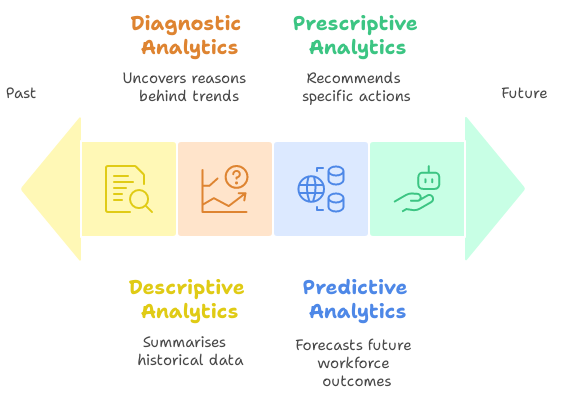
People analytics are classified into four broad types, each with varying levels of insight and effect. Combined, the analytics present a comprehensive view of workforce patterns and enable HR professionals to transition from reactive to strategic decision-making.
What is Descriptive Analytics?
Descriptive analytics focuses on summarising historical data to answer the question, “What happened?” It provides insights into workforce patterns, such as turnover rates, absenteeism, hiring timelines, and employee engagement survey results. This type is foundational, and organisations often begin here before advancing into deeper analytics.
Example: A dashboard showing quarterly employee attrition rates across departments highlights which teams experience higher turnover.
What is Diagnostic Analytics?
Diagnostic analytics gets to the why behind trends and results. It responds, "Why did it happen?" This level assists HR departments in determining root causes by comparing data sets, segmenting populations, and identifying correlations.
Example: By analysing exit interviews with performance ratings and engagement data, HR can determine if poor talent management is causing attrition.
What is Predictive Analytics?
Predictive analytics applies statistical models and machine learning to predict future workforce outcomes. It responds, "What is likely to happen?" This forward-looking information enables proactive HR planning and risk management.
Example: A predictive model can highlight high-potential employees at risk of flight based on behavioural change, promotion history, and manager ratings.
What is Prescriptive Analytics?
Prescriptive analytics takes it one step further by proposing actions. It responds, "What should we do?" This kind of usage employs sophisticated algorithms to propose solutions and predict outcomes, allowing evidence-based decision-making.
Example: Depending on patterns in the data, the system might propose personalised learning paths to enhance retention or propose team reshuffles to level workload.
How to Use People Data?
Collecting data and storing large sets of numbers isn't going to be of use. It's the insights that inform decision-making, improve employee experiences and drive business results. These actionable insights are more than numbers; they are calls to action. Raw data collected from the people must be processed to derive insights and actionable information. Here's what you can do after collecting people's data:
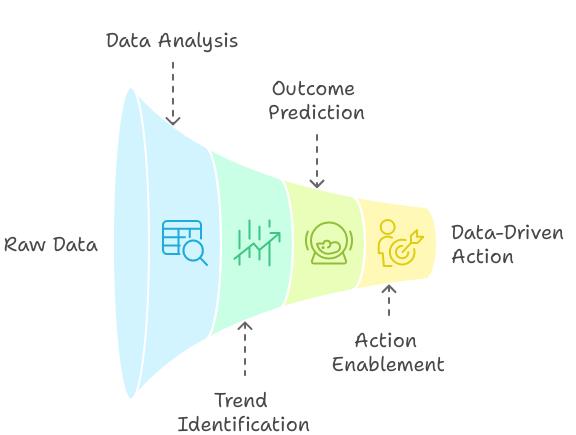
Transform Raw Data into Actionable Insights
HR systems harvest huge quantities of data, but it's the analysis and interpretation that reveal value. People analytics platforms analyse structured and unstructured data to identify correlations, trends, and patterns that aren't immediately apparent.
Example: Cross-analysing scores from engagement surveys and exit rates can show that disengagement always starts after month six in a particular role.
Identifying Trends and Forecasting Outcomes
Advanced analytics can identify major predictors of upcoming events. This enables HR to respond early, whether that involves solving workload problems, spending on leadership development, or updating hiring standards.
Example: A sudden increase in absences followed by decreased employee engagement could indicate burnout, triggering early interventions.
Facilitating Targeted, Data-Driven Action
Instead of using blanket policies, people analytics allows teams to customise interventions to individual groups, roles, or issues. Insights inform everything from training program design, DEI enhancement, succession planning, and cultural initiatives.
Example: If diverse teams are found to outperform others in innovation roles, HR can align recruitment strategies with that and prioritise inclusive leadership training.
Role of People Analytics in Workforce Management
In a report by HR.com, a meagre 22% of HR practitioners owned up to having processes to maximise the benefits of people analytics. Organisations are far stronger at gathering data than at using it in business decisions. People analytics is used extensively in talent acquisition, recruitment and retention, but it can also be applied across various dimensions of workforce management.
HR Leaders and People Analytics
HR leaders are at the heart of the successful adoption and use of people analytics. Beyond data comprehension, they have to drive alignment, be adoption champions, and apply insights to shape talent and business results.
Connecting Data to Decisions
HR leaders are best placed to bridge the gap between data and action. They take raw data and translate it into strategic workforce decisions. Whether planning a hiring strategy, building development programmes, or succession planning, they have to justify and optimise their process using data.
Example: An HR leader can utilise attrition predictions and make suggestions for specific retention strategies for at-risk, high-impact positions.
Developing Analytical Capability in HR
Leadership needs to make sure their HR teams are equipped with appropriate skills, tools, and attitudes to operate with business data. They could do this by recruiting data specialists, reskilling existing staff, or establishing cross-functional alliances with finance, operations, or IT.
Main responsibilities include:
Develop data literacy among teams.
Upskill HRBPs to read dashboards and visualisations.
Establish a centre of excellence.
Driving Stakeholder Buy-in
It's not business data that creates change - people do. HR leaders must champion people analytics at the executive level and demonstrate how workforce insights drive business growth. They need to make sure line managers, department heads, and senior leadership know how to act on the insights they are given.
Successful approaches to improve the adoption of people analytics are:
Publish success stories and case studies.
Put numbers behind ROI from previous analytics projects.
Provide clear, action-oriented insights to business leaders.
Performance Management
Performance management is no longer an annual process with static ratings. Organisations are now shifting towards data-driven, real-time performance plans for development, accountability, and engagement with the help of people analytics.
Improving Performance Reviews with Workforce Analytics
Classic performance reviews are prone to bias, recency traps, or ambiguous standards. People analytics brings objectivity by incorporating standardised data from multiple sources - feedback from managers, peer reviews, OKRs, productivity apps, and project results.
Example: An organisation can compare achievement against goals by department and correlate with training attendance, which would help to identify skill gaps or top-performing groups.
Finding High Performers and Skill Gaps
The people analytics identifies who is performing and why. It uses measures such as customer satisfaction ratings, task completion, and learning participation to create rich employee profiles. Managers are able to spot talent early on and provide tailored development.
Example: Predictive models can use performance and growth behaviour data to identify high-potential employees
Tailoring Development Plans
Rather than generic programs, workforce analytics makes it possible to craft differentiated learning paths. Through analysis of career path data and the patterns in performance skills, HR can develop customised development plans that align with the individual employee's objectives and business requirements.
Example: In case data indicates that product management team leaders stand to gain from negotiation training, HR can suggest it to future leaders along that career path.
Workforce Planning
Workforce planning makes sure that an organisation possesses the appropriate individuals in the correct positions at the correct time. People analytics takes this process from speculation to accuracy, allowing HR and leadership to plan for change, reduce risk, and match talent with future requirements.
Forecasting Talent Demand and Supply
Tools for people analytics can forecast future workforce requirements based on growth milestones, industry trends, and employee mobility. Organisations will be able to determine when, where, and what talent will be needed through these predictions.
Example: Assuming predictive analytics picks up an increase in product demand, HR can sensibly boost recruitment for customer support jobs three months ahead of time.
Detecting Skill Gaps
Analytics enables departments and teams to monitor existing skill levels. Analytics also indicates where there is a gap or will be one because of turnover, promotion, or change in business strategy. This provides a basis for making decisions regarding recruitment, training, and mobility within.
Example: If a firm expands its AI services, but only 12% of the workforce possesses relevant skills, analytics can help drive reskilling plans for specific areas.
Facilitating Strategic Initiatives
From acquisitions and mergers to digital transformation, workforce planning through analytics can help reduce risks in business moves. It aligns talent strategy with operational needs and budget constraints.
Example: When a company is restructuring, analytics can identify which jobs are essential, which ones are redundant, and where to shift skilled employees.
Employee Retention
Retaining top talent is vital for business stability, growth, and cost control. People analytics helps identify the underlying causes of employee turnover and reveals how to build an environment where people choose to stay and thrive.
Predicting Turnover Before It Happens
Through historical trends and behavioural signals, predictive models can identify employees with a higher risk of turnover. Such models take into account engagement scores, days since promotion, compensation equity, manager dynamics, and internal mobility history.
Example: An analytics platform can reveal that employees not receiving regular feedback over the last 90 days are 2.5x more likely to quit.
Diagnosing Drivers of Retention and Attrition
By combining exit interview data, pulse survey responses, and participation rates, HR departments can see what works and what sends talent running. Data segmented by department, location, or role level provides more acute insights.
Example: Excessive first-year turnover in a sales department may be connected to poor onboarding or unachievable goals.
Informing Retention Strategies with Data
Once areas of risk are identified, HR can move with purpose. Whether it's rebuilding onboarding, enhancing manager training, or refining career paths, each effort can be evidence-based.
Some of the best ways to use people analytics KPIs include:
Employ engagement analytics to customise team-level interventions.
Track retention rates after policy changes to gauge effectiveness.
Consider stay interviews as an anticipatory replacement for exit data.
Why People Analytics Insights are Important for Business Outcomes?
People analytics is not a back-office support function any more; it's a strategic enabler of business success. By leveraging people data to inform decisions, organisations become more productive, more resilient, and spend less. Workforce insights can help businesses in ways beyond HR, such as:
Connecting Workforce Metrics to Business KPIs
One of the most beneficial uses of people analytics is its capacity to bridge HR metrics to business goals. Great companies don't see engagement, retention, or performance as isolated HR targets. They monitor how these drive customer satisfaction, revenue growth, and operational efficiency.
Case in point: STP Tower (Indonesia)
This telecom infrastructure company utilised Darwinbox's Performance and OKR module to synchronise individual goals with organisational company objectives. All in all,
85% of the employees accomplished their goals within weeks
More than 20,000 feedback interactions were captured across teams
With 90% sync between individual and organisational goals, the organisation improved execution velocity and sharpened focus across teams.
Facilitating Smarter Business Decisions
People analytics enables leaders to make data-driven decisions, particularly in workforce planning, resource deployment, and team reconfiguration. By measuring trends and identifying gaps before they occur, organisations can prevent inefficiencies and make forward-thinking decisions that drive growth.
Case in Point: Bharti AXA Life Insurance (India)
This insurer utilised Darwinbox to automate and streamline its hiring and performance processes. With real-time insights into candidate pipelines and performance metrics, Bharti AXA
Lowered time-to-hire by 25%
Enhanced offer acceptance by 20%.
Not only did these improvements streamline recruitment, but they also enabled critical positions to be filled earlier, supporting business momentum overall.
Proving ROI on People Initiatives
HR chiefs find it difficult to demonstrate the bottom-line effect of people initiatives. People analytics makes it possible. Businesses can quantify the actual return on investment by measuring metrics linked to onboarding, performance, learning, or scheduling and justify further talent investment.
Case in point: Yashoda Hospitals (India)
With more than 10,000 staff, Yashoda had intricate shift planning and compliance issues. They used Darwinbox to process 20+ varieties of shifts automatically, digitalise attendance reporting, and simplify payroll. This freed up more than 10 man-days per month and optimised workforce deployment across the clinical groups. The outcome?
Increased operational efficiency
Improved quality of care for patients.
Developing and Implementing a People Analytics Strategy for Business Success
A people analytics strategy is a blueprint connecting workforce insights with business goals. When done properly, people analytics tools inform the way organisations gather, analyse, and use people data to enhance decision-making, performance, and results. Strategy alone is insufficient. Execution has to adhere to best practices to deliver results from insights.
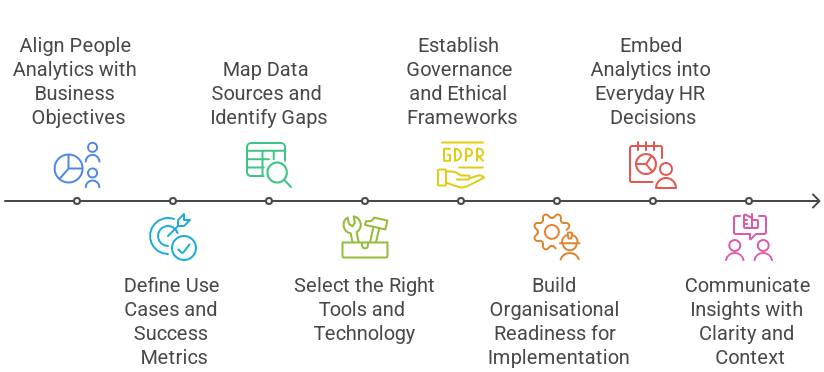
#1 Align People Analytics with Business Objectives
Each people analytics project needs to connect directly to strategic business objectives. No matter whether you're looking to decrease attrition, increase productivity, or grow new teams, analytics needs to drive these results.
Example: If an organisation is looking to scale customer support, the analytics approach should focus on measures such as hire speed, training success, and support role first-year retention.
#2 Establish Use Cases and Success Metrics
Prioritisation based on use cases enables HR departments to concentrate resources where they will be most effective. Valuable use cases are forecasting attrition, enhancing hiring, team performance benchmarking, or measuring drivers of engagement. Each use case must incorporate business-synchronised KPIs.
Example: For hiring talent, an explicit metric could be "shorten time-to-hire by 20% in six months."
#3 Identify Data Sources and Highlight Gaps
Strong people analytics needs high-quality data from various systems. Bring together structured information from systems such as HRIS, ATS, and LMS and unstructured HR data such as survey responses or performance comments. Pre-launch, perform a rigorous audit to verify gaps, silos, or variable data practices.
Best practice: Overcome integration hurdles early and normalise key fields across systems for accurate insights.
#4 Choose the Right Tools and Technology
People analytics platforms have to scale with the business, provide real-time information, and facilitate predictive insights. They have to integrate well with existing systems.
Recommended platform: Darwinbox provides an end-to-end HCM suite with embedded analytics, AI-driven inputs, and mobile dashboards. It simplifies managing workforce performance, employee engagement, and people planning. It accommodates basic as well as advanced modelling to enable proactive decision-making.
#5 Develop Governance and Ethical Frameworks
Data governance is vital. Determine the ownership of data, who has access, and how privacy is ensured. Comply with regulations such as GDPR and create internal rules to instil trust among employees.
Tip: Describe how HR data will be utilised, and provide opt-ins where possible. Transparency leads to adoption.
#6 Create Organisational Readiness for Implementation
Implementation must start with solid foundations:
Data readiness: Confirm data accuracy and facilitate smooth integration between platforms.
Alignment of stakeholders: Engage HR, IT, finance, and business unit leaders for buy-in and co-ownership.
Capability building: Give people managers and HR professionals the capabilities and tools to decode and respond to insights.
Example: Most companies start with simple dashboards to create familiarity, followed by machine learning models once the internal maturity builds.
#7 Put Analytics into Daily HR Decisions
To leave a lasting influence, people analytics should inform everyday decisions, not just quarterly reports. Infuse insights into:
Performance reviews and succession planning
Engagement initiatives and training plans
Recruitment processes and onboarding
Make use of automation where possible to trigger notifications for top risks (e.g., declining team morale or attrition alerts) and enable managers with self-service dashboards supported by training.
#8 Communicate Insights with Clarity and Context
Even great HR data lacks sense without context. Actionable insights are made possible by effective storytelling. Utilise a mix of:
Interactive dashboards for instant visibility
Written summaries for executive reports
Frequent reviews to align HR metrics with business results
Tip: Always present insights in business language. Instead of saying simply, "engagement is low," say, "Teams with lower engagement fell behind quarterly sales goals by 12%."
Future of People Analytics
The future of people analytics lies in smarter technologies, ethical practices, and tighter integration with business strategy as organisations keep digitising HR. The discipline is transitioning from measurement to foresight.
Artificial Intelligence and Machine Learning
AI allows people analytics to move beyond reporting and prediction, to personalisation and real-time decision-making. Machine learning algorithms can identify intricate patterns in large datasets, getting progressively more accurate over time.
Use case: AI-based platforms such as Darwinbox are now able to suggest individualised learning trajectories or warn of burnout potential before it emerges in surveys.
Continuous, Real-Time Listening
Surveys are transitioning from yearly modalities to continuous listening tools. These tools monitor employee feelings through everyday feedback, Slack integrations, or passive behaviour measurement.
Use case: If the communication activity of a team declines drastically, the system is able to warn of possible disengagement in real-time.
Ethical Use of Data
With increasing power comes greater HR data ethics issues. The future requires open practices, privacy protection, and explicit limits on what organisational data is used and why. Key areas of emphasis are:
Data transparency and consent
Data minimisation
Fairness in predictive models (preventing bias in hiring, promotion, etc.)
Increasing Integration with Business Strategy
People analytics will further extend beyond the HR function, touching workforce cost modelling, location strategy, ESG reporting, and organisational culture transformation.
Use case: A business looking to expand globally might apply people analytics to select the best area to expand to based on skillsets available, pay standards, and risks of turnover.
Conclusion
Analytics is now critical to improved business outcomes. It allows HR professionals to forecast turnover, link planning to business outcomes, enhance performance management, and increase retention based on data. However, results are driven by more than data. You require a transparent strategy, good governance, and a data-driven culture that makes it possible to convert the insights into action. Progressive organisations use analytics as a mindset, not merely a tool. Those who invest in the correct technology to make data-driven decisions will be the ones at the forefront.
Learn how Darwinbox equips HR professionals with real-time insights and a single platform for more intelligent, quicker decisions. Discover how Darwinbox people analytics software can transform your organisation.
FAQs
What are the best practices that make people analytics most effective?
Integration of sources to eliminate duplication and cleansing of data enables the reliability of data. It's important to standardize metrics. Involve HR and business leaders to make data-driven decisions.
How does people analytics support employee retention and engagement?
People analytics provide insights into retention risks, levers for engagement, and satisfaction trends among employees. These insights guide personalized development plans, workplace culture, and enhance employee experience, which drives loyalty and reduces attrition.
Which tools or technologies are effective for people analytics?
Effective tools include HR analytics platforms, AI-supported dashboards, and comprehensive HRMS solutions. Darwinbox provides enhanced analytics, predictive insights, and/or automation, thus ensuring better workforce decisions, while aligning HR strategies with desired business outcomes.