
AI-native HCM is a human capital management system designed with AI as the organizing principle for everything in it, instead of AI being a capability added later. It keeps sensing signals from across the organization, makes sense of them in the context of that particular company, and acts on them within boundaries that widen as its judgment earns trust. And it does that work inside the tools people already use, so nobody has to go looking for it.
There's a reason to be this precise about the definition. "AI-native" is in danger of being stuck on any system with AI features, no matter how those features got there. The simplest way to give the term its meaning back is to mark both sides of the line: what AI-native HCM is, and what it isn't.
Why does AI-native HCM need a clear boundary?
Each era of HR software has been defined by what the system was built to do. Early HCM was a dependable ledger that told you what was true about an employee right now. Workflow systems moved data through steps someone had laid out in advance. The current generation added AI agents that can run a multi-step process by themselves.
All of those eras rest on the same assumption. The system waits for an explicit trigger, such as a form submission, a workflow step, or a typed question, and then it responds. AI-native HCM is the first to be built without that assumption, and that's where the boundary sits.
What AI-native HCM is
It is built around AI from the ground up. When AI sits at the core of a system's design, every decision about what data to collect, how information moves, and who can act on what starts with the same question: what does the AI need to do its job well and multiply the impact of people working with it?
It is connected across the organization. AI-native HCM reads the organization as a single whole instead of a set of separate modules. An emerging skills gap might show up as roles taking longer to fill, low uptake of related courses, and the same development need recurring in performance reviews. Because its data was built to be read together, an AI-native system can spot that pattern early and act on it, enrolling the affected team in a targeted learning path and updating open job requisitions, within limits HR has approved.
It is grounded in company-specific context. The same signal can mean very different things in different organizations. A jump in sales resignations might be a five-year seasonal pattern linked to commission payouts at one company, and the first sign of a group leaving over a manager at another. AI-native HCM reads signals against the organization's own policies, history, and people, instead of a generic benchmark.
It is proactive. Traditional systems follow an event, system, transaction sequence and then go back to idle. AI-native HCM runs a continuous loop instead: signal ->understanding -> governed action-> and trust. It flags risks before anyone asks and suggests actions based on what it sees.
It is bounded, and its autonomy is earned. Every action is scoped, logged, and reversible by design. Each one leaves evidence of whether it worked or needed a person to step in, and that evidence widens or narrows what the system can do next.
It is present in the flow of work. Work happens in email, collaboration tools, and meetings. AI-native HCM delivers its output in those places instead of behind a login screen.
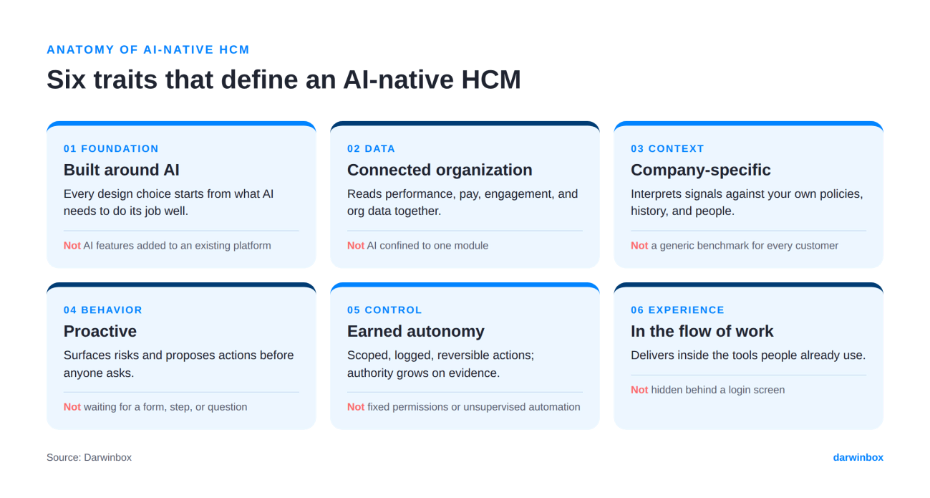
Figure 1: The six traits that define AI-native HCM.
What AI-native HCM is not
It is not an HCM with more AI features. AI-powered systems merely add AI features to an existing platform. Piling on more AI features won't eventually make an AI-powered system AI-native, because the difference is in how it was built. Each new feature sees only the part of the system it was attached to, so the organization never comes into view as a whole.
It is not a collection of agents. AI agents are a real improvement over static workflow automation. They can screen resumes, schedule interviews, or take a service request from start to finish. But agents added on top of existing systems stay stuck inside the predefined processes they were built for. AI-native systems can go beyond the predefined paths and suggest new action plans based on the context they have.
It is not a chatbot waiting for questions. A conversational assistant answers the exact question it was asked. AI-native HCM picks up on patterns and risks that nobody has thought to ask about yet.
It is not unsupervised automation. No organization should hand broad authority to a system without a track record, and AI-native HCM doesn't ask for it. It acts only within the boundaries the organization sets, and requests expansion in scope only as it earns the credibility, and keeps every action traceable and reversible.
It is not a replacement for HR judgment. In an AI-native environment, HR business partners steer the system. They feed it inputs, manage how much autonomy it earns, and teach it through the suggestions they accept or reject. The system spots quiet patterns across hundreds of people. People still decide what to do about them, whether that's a tough conversation with a manager or a rethink of the compensation philosophy. The most valuable skill in this setup is being able to argue with the AI: pushing back on a signal, asking why it came up, and correcting it when it's wrong.
It is not static after go-live. A system of record gives the same answer to the same question on day one and in year five. AI-native HCM runs on a continuous loop, so its understanding of a particular organization gets sharper with each cycle.
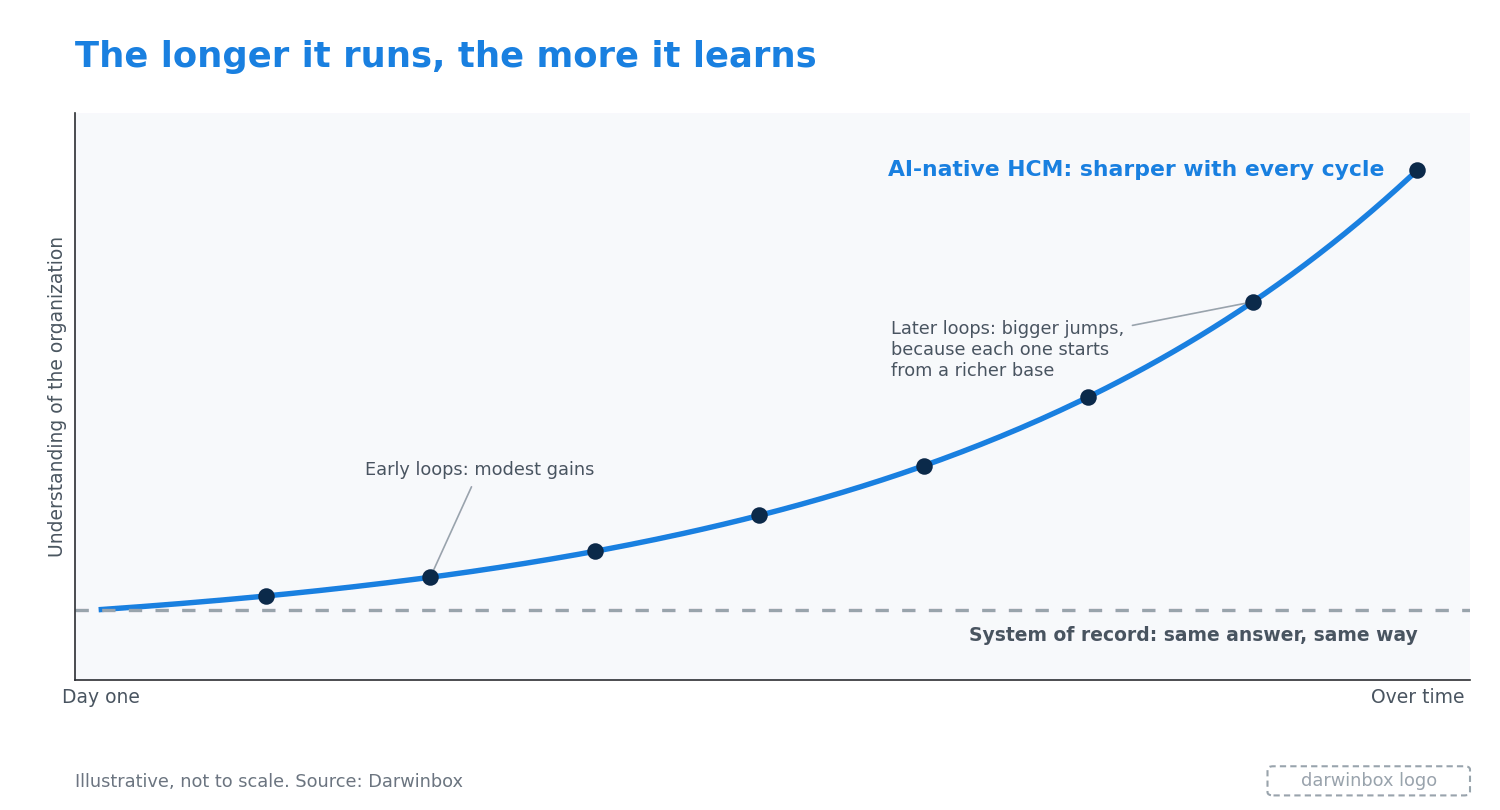
Figure 2: A system of record stays where it started. AI-native HCM keeps learning.
AI-native HCM checklist: what it is and what it is not
You can run any platform that calls itself AI-native through this checklist.
| Area | ✓ AI-native HCM is | ✗ AI-native HCM is not |
|---|---|---|
| Foundation | Built with AI as the starting assumption | AI features added to an existing platform |
| Data | Connected across the organization by design | AI scoped to one module or workflow |
| Context | Interpreted against the company's own history and patterns | Generic rules or benchmarks applied to every customer |
| Trigger | Initiates on signals it detects, continuously | Waiting for a form, a workflow step, or a question |
| Intelligence | Notices patterns and risks nobody has asked about | Answering only the question it was asked |
| Agents | Agents acting on connected data and company context | A growing collection of standalone agents |
| Autonomy | Earned over time through a recorded track record | Fixed at the level configured during setup |
| Controls | Every action scoped, logged, and reversible by design | A permissions layer bolted on top, or unsupervised automation |
| Where it lives | Inside the tools people already use for work | Behind a login screen users must seek out |
| Role of HR | HR guides, teaches, and corrects the system | HR replaced, or reduced to executing faster |
| Over time | Sharper with every cycle | The same on day one and in year five |
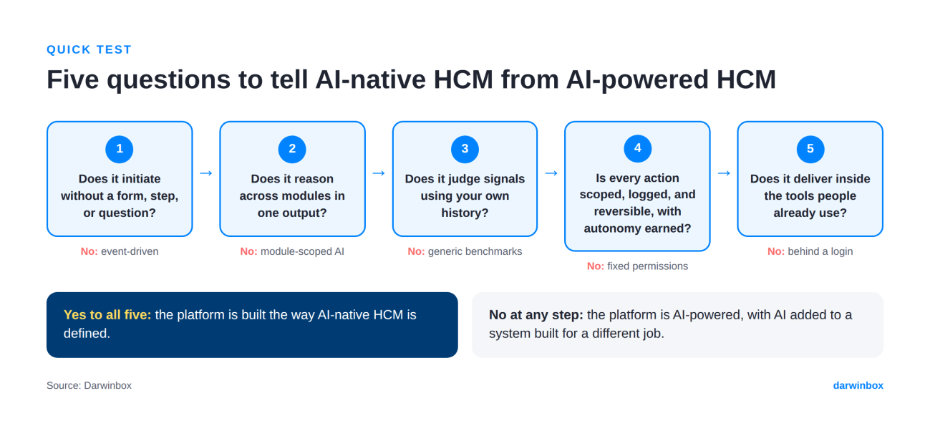
Figure 3: A five-question quick test. A "no" at any step points to AI-powered, not AI-native.
Where does Darwinbox Cortex fit?
Darwinbox Cortex is an AI-native HCM built from the ground up on a context graph, which connects information across the organization instead of boxing it into separate modules. It works through four capabilities that line up directly with the checklist. It senses signal across the organization. It reasons against the company's own policies, history, and people. It acts within boundaries the organization sets, with every action scoped, logged, and reversible. And it meets people inside the tools they already use.
These capabilities work as a loop. Cortex starts out with narrow authority, and every completed cycle adds to a track record the organization can inspect, which in turn widens or narrows what Cortex is trusted to act on. None of this was layered onto an existing HCM. It's what the HCM was built around in the first place.
Learn more. Explore Darwinbox Cortex

Drawing the line
How much AI a platform contains matters less than whether it was built to sense, understand, and act across the organization within limits people control, and to keep getting better at it. Platforms that meet that bar are AI-native. Everything else, however capable, is AI added to a system that was designed for a different job.
FAQs
What is AI-native HCM?
AI-native HCM is a human capital management system built with AI as its organizing principle. It keeps sensing signals across the organization, reads them in the context of that company's policies and history, and acts within boundaries that grow as it earns trust. It delivers that work inside the tools people already use.
Is an HCM with AI agents automatically AI-native?
No. Agents can finish multi-step HR tasks on their own, but agents added to an existing platform still run predefined processes, wait for a trigger, and see only the data of the module they were built for. A system is AI-native when AI shapes its foundation: connected data, company-specific context, and controls built into the design.
Does AI-native HCM replace HR professionals?
No. AI-native HCM picks up patterns across hundreds of employees that no one person could track, but people decide what to do about them. HR teams steer the system, manage the autonomy it earns, and correct it when a signal doesn't match what they know.
Is it safe to let an AI-native HCM take action on its own?
That's what it's designed for. An AI-native HCM acts only within boundaries the organization sets and asks for approval when the stakes call for it. Every action is scoped, logged, and reversible, and its authority grows only as far as its recorded track record justifies.
Does an AI-native HCM improve over time?
Yes. Each action leaves evidence, including whether people accepted or corrected what the system proposed. That evidence feeds back into what the system senses and understands next, so its grasp of a particular organization keeps sharpening with each cycle instead of freezing after implementation.