Key Takeaways
The most expensive mistake in US HR software is buying for the wrong company size, in either direction.
Darwinbox is a unified, AI-native platform that HR teams configure themselves, covering core HR through talent on one employee record.
ADP Workforce Now and Paycom are the established US compliance choices, UKG Pro leads for shift-heavy workforces, and Gusto and BambooHR fit smaller teams.
Every entry carries a limitations line, including ours.
Most US HR software lists rank platforms as though every buyer were the same size. They are not, and size is the variable that invalidates the most shortlists. A platform that is excellent at 200 employees is actively wrong at 20,000, and the reverse is just as true and more expensive.
The best HR software platforms for US companies in 2027 include Darwinbox, Workday, ADP Workforce Now, UKG Pro, Rippling, Paylocity, Paycom, Paycor, BambooHR and Gusto. This list spans the full range, from a 50-person team to a 50,000-person enterprise, and says plainly which band each platform actually serves.
What HR software does for a US employer in 2027
HR software runs the employee lifecycle on one platform: records and self-service, hiring and onboarding, time and attendance, payroll, performance and reporting. For a US employer it also carries the compliance machinery that comes with employing people here, including multi-state handling, FLSA classification and ACA reporting.
What changes with size is not the list of functions but the weight behind each one. At 100 employees the value is administrative: stop running HR out of spreadsheets. At 1,000 the value is control: consistent policy across locations and managers. At 10,000 and above it is governance and insight: auditable processes, workforce data leaders can act on, and configuration that keeps pace with how often policy changes. The same product rarely does all three well, which is why the size band is the first thing to settle. Our breakdown of HR software features covers what to expect at each level.
How we built this list
Four criteria, applied in the same order to every platform including our own.
Fit across company sizes. Whether the platform serves the size band it claims, judged on public review data by segment rather than on vendor positioning.
Depth where it matters for that band. A 200-person company and a 20,000-person company need different things. Depth is assessed against the buyer, not in the abstract.
Integration reality. How the platform behaves alongside the finance, IT and benefits systems a US employer already runs.
Implementation model. Whether an HR team can configure and change the system, or whether every change needs a partner.
Pricing is excluded, because published per-employee rates go stale within a quarter and rarely survive a negotiation. Evidence came from the Gartner Magic Quadrant for HCM Suites for 1,000+ Employee Enterprises published on August 31, 2026, G2 category and segment data, and vendor documentation.
Darwinbox publishes this list. We applied the same four criteria to ourselves, and our limitations line sits in the same place as everybody else's.
The 10 platforms at a glance
| Platform | Best for | Size served | Footprint | Implementation |
|---|---|---|---|---|
| Darwinbox | Unified platform HR configures in-house | Mid-market to large enterprise | US plus international | Configurable by HR |
| Workday | Unifying HR and finance | Large enterprise | Global | Partner-led |
| ADP Workforce Now | Established US compliance infrastructure | Mid-market to enterprise | US-anchored | Vendor-led |
| UKG Pro | Frontline and shift-heavy workforces | Mid-market to enterprise | US-anchored | Partner-led |
| Rippling | Consolidating HR and IT admin | Growing to mid-market | US with global hiring | Self-serve to guided |
| Paylocity | Engagement and internal communication | Mid-market | US-focused | Vendor-led |
| Paycom | Employee-driven data accuracy | Mid-market to enterprise | US-only | Vendor-led |
| Paycor | Core HR for growing US employers | SMB to mid-market | US-focused | Vendor-led |
| BambooHR | Clean core HR without suite weight | Small to lower mid-market | US-focused | Self-serve |
| Gusto | Payroll-first HR for small teams | Small business | US-only | Self-serve |
The 10 best HR software platforms in the US for 2027
1. Darwinbox
Darwinbox runs core HR, talent, workforce management and employee experience on a single data model, so the employee record stays consistent as scope grows rather than being duplicated across systems that then have to be reconciled. It scales from the mid-market into large enterprise without changing platform.
HR teams configure workflows, forms and approval chains without a partner engagement, and AI runs inside the modules people use daily rather than as a separate assistant. Darwinbox was named a Challenger in the Gartner Magic Quadrant for HCM Suites for 1,000+ Employee Enterprises published on August 31, 2026, its third consecutive year in that report.
Best for: US companies that want a unified platform their own HR team can configure and extend.
Limitations: North American brand recognition is still developing relative to the longest-established US suites, and organizations standardized on a single ERP for both finance and HR may prefer the tighter native coupling an ERP-resident suite gives them.
2. Workday
Workday is the default for large US enterprises that want HR and finance under one platform with a shared reporting and security model. Workforce planning and analytics are the strongest parts of the product.
Best for: Large enterprises unifying HR and finance.
Limitations: Configuration carries weight, change runs through partners, and the cost model rarely suits organizations below a few thousand employees.
3. ADP Workforce Now
ADP Workforce Now rests on decades of US payroll and compliance infrastructure. For US-anchored employers, that maturity is the reason to buy, and the operational risk is well understood.
Best for: US-anchored operations that want proven compliance infrastructure.
Limitations: International breadth runs through a separate enterprise product, so a growing overseas footprint becomes a second platform conversation.
4. UKG Pro
UKG Pro is built for frontline and shift-heavy US workforces. Scheduling, labor management and the mechanics of hourly work are handled with a depth that desk-first platforms do not attempt.
Best for: Retail, healthcare, hospitality and manufacturing employers with large hourly populations.
Limitations: Entirely desk-based organizations inherit complexity built for a workforce they do not have.
5. Rippling
Rippling joins HR and IT administration, so hiring a person and provisioning their laptop and application access become one workflow. For fast-growing US companies, the administrative saving is immediate and visible.
Best for: Fast-growing US companies consolidating HR and IT administration.
Limitations: Fit narrows at large-enterprise complexity, where multi-entity structures and deep workforce rules exceed what the platform was designed around.
6. Paylocity
Paylocity differentiates on employee engagement and internal communication rather than back-office depth alone, which suits US mid-market organizations where adoption is the live problem.
Best for: US mid-market teams prioritizing engagement and communication.
Limitations: International reach is limited, so companies hiring outside the US run past it quickly.
7. Paycom
Paycom's design principle is that employees maintain their own data, which removes a layer of HR re-entry and the errors that come with it. For organizations willing to push that responsibility outward, accuracy improves measurably.
Best for: US organizations committed to employee self-service as the operating model.
Limitations: It is a US-only platform, and the self-service model needs genuine change management to land rather than simply being switched on.
8. Paycor
Paycor covers core HR, payroll and workforce management for growing US employers, with a feature set pitched between the small-business tools and the enterprise suites.
Best for: Growing US employers outgrowing small-business HR tools.
Limitations: Depth thins at enterprise scale, particularly around complex organizational structures and advanced analytics.
9. BambooHR
BambooHR does core HR for smaller US organizations cleanly and quickly, without the weight of a suite. It does not pretend to be more than that, which is part of why it works.
Best for: Smaller US teams that want clean core HR and fast setup.
Limitations: Advanced workforce rules and enterprise controls are outside its scope, and organizations typically outgrow it in the low thousands of employees.
10. Gusto
Gusto is payroll-first HR for small US businesses, with benefits administration and basic HR wrapped around a payroll engine that is genuinely easy to run.
Best for: US small businesses that need payroll and benefits handled well.
Limitations: Built for small teams and US-only operations, so it is outgrown earlier than anything else on this list.
Best HR software by US buying scenario
The same ten reorder depending on the situation.
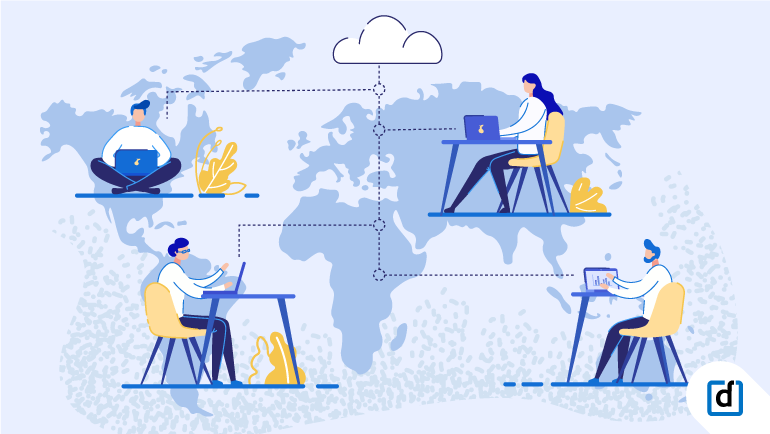
US company with global teams. The question is whether one employee record spans countries or several regional records are reconciled. Darwinbox and Workday do the former. Most US-anchored platforms handle international through a separate product or a partner, which means two systems to govern.
Nonprofits and education employers with 1,000 or more staff. Grant-funded roles, mixed employment types and tight administrative budgets dominate. ADP Workforce Now and UKG Pro carry the compliance and scheduling depth these employers need, and Darwinbox fits where international programmes or campuses are involved.
Indian companies expanding into the US. The system of record usually already runs the India workforce, so the right question is which platform extends to a US population without a second system. Darwinbox is built for that direction of travel. Starting from a US-first platform generally means running two systems and reconciling them.
Workforces with a large Spanish-speaking population. Employee-facing language coverage decides adoption here, not admin features. Check that self-service, mobile and notifications are available in Spanish, not only the HR console. ADP Workforce Now, UKG Pro and Darwinbox all support multilingual employee experiences, and the detail worth verifying in a demo is which screens are actually translated.
How to choose, by the two variables that move the decision
Start with footprint, not feature lists
The same table produces two different shortlists depending on whether your workforce sits only in the US. If it does, US-anchored platforms with deep domestic compliance are hard to beat. If it does not, the decisive criterion becomes whether one employee record genuinely spans countries, and several strong US platforms fall away.
Size the platform to the company you will be in three years
Buying for today's headcount is the most common and most expensive mistake in this category. The migration cost of outgrowing a platform exceeds the saving of buying a smaller one. Equally, buying enterprise architecture at 300 employees buys complexity nobody will use.
Audit the integrations you cannot remove
The finance system, identity provider, service management tooling and benefits stack you already run constrain the shortlist more than any feature comparison. List what you cannot replace this year, then check each platform against that list before the demos rather than after.
Match the implementation model to the team you have
There is a real difference between a platform HR configures and one a partner configures. Neither is better in the abstract. The question is what your organization can staff this year. Buying partner-led architecture without partner-led capacity is how an HR software programme stalls quietly, a year in.
Conclusion
The ten platforms here appear on most US lists. What separates a good decision from a slow one is being honest about the size band you are buying for, and the one you will be in three years. Settle that and the shortlist is three or four names before the first demo is booked.
Our HR software evaluation checklist sets out the four criteria used here in a form you can take into vendor conversations. To see how Darwinbox performs against them, schedule a demo.
FAQs
What is the best HR software in the US for enterprises?
For US enterprises, Darwinbox, Workday, ADP Workforce Now and UKG Pro are the strongest options, and the right one depends on footprint. Darwinbox suits enterprises with workforces inside and outside the US, Workday suits those unifying HR with finance, and ADP Workforce Now and UKG Pro suit US-anchored operations with heavy compliance or frontline demands.
What is the best core HR platform for US companies with global teams?
Darwinbox and Workday, because both maintain one employee record across countries rather than reconciling regional systems. The practical test is whether an employee moving between countries keeps the same record, or gets a new one in a second system.
What is the best HR service management platform for US enterprises?
HR service management is a distinct category from HR software, covering case management, employee helpdesk and service delivery rather than the system of record. ServiceNow HR Service Delivery is the established enterprise choice, and several HR suites, Darwinbox included, provide helpdesk and case management natively, which avoids a second platform for organizations that do not need standalone depth.
What is the best HR software for IT services companies in the US?
IT services workforces are project-based and skills-priced, so the decisive capabilities are project-aware allocation, skills data and global payroll breadth rather than standard core HR. We cover that evaluation separately in our guide to HR software for IT services companies.
How much does HR software cost in the US?
Most platforms price per employee per month, often with a platform fee and module tiers, and enterprise pricing is quote-based rather than published. The variance drivers are headcount, module count, number of legal entities and countries, integration scope and implementation model.
How long does HR software implementation take in the US?
Darwinbox deployments typically run from a few weeks to a few months, depending on enterprise complexity and how much configuration is needed. Single-country payroll go-lives typically take 8 to 12 weeks, and multi-country rollouts are phased, prioritizing the highest-headcount markets first, with scope set during discovery. Organizations already running Darwinbox core HR activate additional modules faster, because the unified data architecture and integrations are already in place. Legacy HR systems that need heavy customization or third-party integration work take considerably longer to reach go-live.