Key Takeaways
An HRMS is bought to automate the operational layer, so the test is how much HR work disappears, not how many modules appear on a slide.
ADP Workforce Now, Paycom and Paycor lead on US payroll and compliance mechanics, UKG Pro and Dayforce on time and labor operations.
Darwinbox automates the lifecycle on one employee record, and HR teams reconfigure it themselves as policy changes.
Every entry carries a limitations line, including ours.
An HRMS earns its cost in hours, not features. The question is how much of the monthly cycle still needs a person: chasing timesheets, correcting leave balances, reconciling records between payroll and HR, rebuilding the same report. A platform that removes that work is worth more than one with a longer module list.
The best HRMS software for US companies in 2027 includes Darwinbox, ADP Workforce Now, UKG Pro, Dayforce, Paycom, Paylocity, Paycor, Workday, Rippling and BambooHR. Which one fits depends on where your operational load actually sits, and whether your workforce stops at the US border.
What an HRMS does, and where it stops
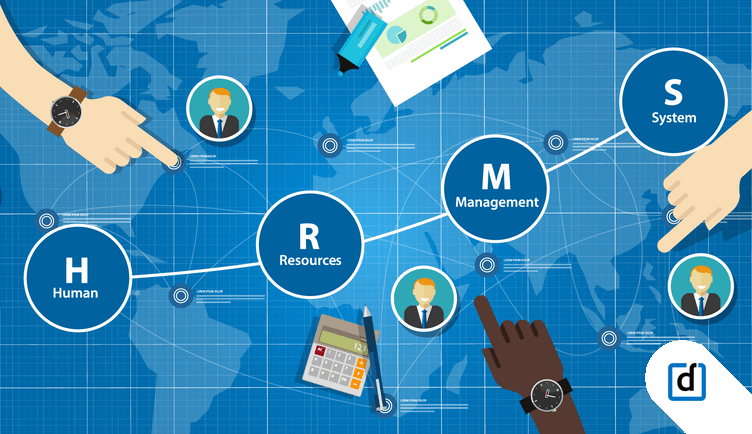
An HRMS sits between the two categories either side of it. An HRIS holds the employee record. An HRMS adds the operational processes that run on that record: payroll, time and attendance, leave, onboarding, document workflows and the approvals that connect them. An HCM suite adds the strategic layer above, covering talent, succession, workforce planning and analytics.
The practical consequence is that HRMS buying is judged on throughput rather than insight. If HR spends the last week of every month reconciling data between systems, that is the problem an HRMS is bought to solve, and it is the one to measure every platform against. Our guide to HRIS, HRMS and HCM sets out the full distinction between the three terms.
How we built this list
Five criteria, applied in the same order to every platform including our own.
Process automation breadth. How many lifecycle processes run end to end without HR re-entering data.
Time and labor depth. Scheduling, attendance, overtime rules and exception handling, which is where most US operational cost actually sits.
US compliance mechanics. Multi-state handling, FLSA classification, ACA reporting and the audit trail behind them.
Cross-border consolidation. Whether US and international operations can run on one system, or need two.
Implementation and change model. Whether an HR team can change a workflow, or whether every change is a ticket.
Pricing is excluded, because published rates go stale within a quarter. Evidence came from the Gartner Magic Quadrant for HCM Suites for 1,000+ Employee Enterprises published on August 31, 2026, G2 category and segment data, and vendor documentation. Darwinbox publishes this list and applied the same five criteria to itself.
The 10 platforms at a glance
| Platform | Operational strength | Size served | Footprint | Implementation |
|---|---|---|---|---|
| Darwinbox | Lifecycle automation on one record | Mid-market to large enterprise | US plus international | Configurable by HR |
| ADP Workforce Now | US payroll and compliance mechanics | Mid-market to enterprise | US-anchored | Vendor-led |
| UKG Pro | Scheduling and labor management | Mid-market to enterprise | US-anchored | Partner-led |
| Dayforce | Continuous pay and time calculation | Mid-market to enterprise | US with global reach | Partner-led |
| Paycom | Employee-maintained data accuracy | Mid-market to enterprise | US-only | Vendor-led |
| Paylocity | Engagement and communication workflows | Mid-market | US-focused | Vendor-led |
| Paycor | Core HR and payroll for growing employers | SMB to mid-market | US-focused | Vendor-led |
| Workday | Enterprise process governance | Large enterprise | Global | Partner-led |
| Rippling | HR and IT provisioning in one workflow | Growing to mid-market | US with global hiring | Self-serve to guided |
| BambooHR | Lightweight core HR operations | Small to lower mid-market | US-focused | Self-serve |
The 10 best HRMS software platforms in the US for 2027
1. Darwinbox
Darwinbox automates the operational layer on a single employee record, so onboarding, attendance, leave, approvals and document workflows share one source of data rather than exchanging it. The gain shows up in the work that stops happening: fewer reconciliations between systems, fewer corrections after the fact.
The configurability matters more here than in any other category. HR teams change workflows, forms and approval chains directly, which is what keeps an operational platform current as policies change. Darwinbox was named a Challenger in the Gartner Magic Quadrant for HCM Suites for 1,000+ Employee Enterprises published on August 31, 2026, its third consecutive year in that report.
Best for: US enterprises that want the operational layer automated on one record and changed in-house as policies shift.
Limitations: Organizations buying primarily for US payroll processing depth will find the US payroll specialists more established on that specific dimension, and North American brand recognition is still developing relative to the longest-standing US names.
2. ADP Workforce Now
ADP Workforce Now is the reference point for US payroll and compliance mechanics. Multi-state handling, tax filing and the audit trail behind them are mature in a way that is difficult for newer entrants to match quickly.
Best for: US-anchored employers where payroll accuracy and compliance are the primary operational risk.
Limitations: International operations run through a separate enterprise product, and configuration changes generally route through ADP rather than your HR team.
3. UKG Pro
UKG Pro is built around labor operations. Scheduling, attendance, overtime rules and exception handling carry genuine depth, which is where the operational cost concentrates for hourly workforces.
Best for: Shift-heavy US employers in retail, healthcare, hospitality and manufacturing.
Limitations: Desk-only organizations configure around complexity they will never use, and implementations are partner-led.
4. Dayforce
Dayforce calculates pay and time continuously rather than at period end, which removes a category of month-end reconciliation entirely. For workforces with constant variability, that architecture is the product.
Best for: Operations where time and pay change daily rather than monthly.
Limitations: Implementation scope is substantial, and stable salaried populations realize less of the benefit that justifies it.
5. Paycom
Paycom pushes data maintenance to employees, which removes an HR re-entry layer and the errors that come with it. Where organizations commit to that model, accuracy improves in a measurable way.
Best for: US organizations willing to make employee self-service the operating model.
Limitations: US-only, and the self-service model needs real change management rather than a switch being flipped.
6. Paylocity
Paylocity wraps operational HR in engagement and communication tooling, which drives the adoption that operational platforms usually struggle with in the mid-market.
Best for: US mid-market employers where adoption is the obstacle.
Limitations: International reach is limited, and depth thins against the specialists on complex labor rules.
7. Paycor
Paycor covers core HR, payroll and workforce management for growing US employers, pitched between small-business tools and enterprise suites.
Best for: Growing US employers outgrowing small-business HR tools.
Limitations: Depth thins at enterprise scale, particularly on complex organizational structures and analytics.
8. Workday
Workday brings enterprise process governance: consistent approvals, auditability and a shared model with finance. For large organizations, that governance is the operational value.
Best for: Large enterprises needing governed, auditable HR processes at scale.
Limitations: Heavier than most mid-market operational problems require, and changes run through partners.
9. Rippling
Rippling merges HR and IT provisioning, so joiner, mover and leaver processes cover accounts and devices as well as employment records. That is a genuine operational saving for growing companies.
Best for: Fast-growing US companies where IT and HR admin overlap.
Limitations: Multi-entity structures and complex labor rules exceed what it was designed for.
10. BambooHR
BambooHR handles lightweight core HR operations cleanly for smaller US organizations, with fast setup and little administrative overhead.
Best for: Small to lower mid-market US teams with straightforward operations.
Limitations: Advanced workforce rules and enterprise controls are out of scope.
Best HRMS by US buying scenario
Enterprise HRMS for a US-only workforce. ADP Workforce Now, UKG Pro and Dayforce are the strongest, and the choice between them follows your workforce shape. Payroll and compliance risk points to ADP, scheduling complexity to UKG Pro, continuous time and pay variability to Dayforce.
Asia-headquartered company expanding into the United States. The home-market system usually already runs the larger workforce, so the question is which platform extends to a US population without a second system. Darwinbox is built for that direction of travel. Choosing a US-first HRMS at this point generally commits you to running two systems and reconciling them indefinitely.
Consolidating US and international HR onto one system. This is the hardest requirement on the list, because most platforms strong in the US treat international as an adjacent product. Darwinbox and Workday both maintain one employee record across countries. The test worth running in a demo is an employee transferring between countries: do they keep one record, or get a second one.
Replacing several operational point tools. Count the handoffs, not the features. A platform that removes four reconciliations a month is worth more than one that adds four modules nobody opens.
How to choose an HRMS in the US
Start with where the hours actually go
Audit a single month. Which processes consumed HR time, and why. Most organizations discover the cost sits in two or three recurring reconciliations, not across the whole lifecycle, and that finding reorders the shortlist immediately.
Decide whether international is in scope now or later
Adding international to a US-anchored HRMS later usually means a second platform, not an upgrade. If an overseas workforce is likely within three years, weigh consolidation now rather than paying the migration later.
Check who can change a workflow
Policies change every year. If every change is a vendor ticket, the platform ages faster than your policies do. Ask in the demo who makes a change, how long it takes, and what it costs.
Test the exceptions, not the happy path
Any HRMS demos well on a standard joiner. Ask to see a mid-month transfer between entities, a retroactive leave correction and a multi-state employee. Exceptions are where operational platforms separate.
Conclusion
An HRMS is judged on the work it removes. Audit where your hours go, decide whether international is in scope, and test the exceptions rather than the demo script. That sequence narrows ten platforms to three before anyone sends a proposal.
Our HRMS evaluation checklist sets out the five criteria used here in a form you can take into vendor conversations. To see how Darwinbox performs against them, schedule a demo.
FAQs
What is the best enterprise HRMS for companies in the United States?
There is no single answer, because HRMS fit follows where your operational load actually sits. Darwinbox suits enterprises that want the lifecycle automated on one employee record and reconfigured by HR as policies change. ADP Workforce Now, Paycom and Paycor suit employers where US payroll and compliance mechanics are the primary risk. UKG Pro and Dayforce suit shift-heavy workforces where scheduling and time drive the cost. Workday suits large enterprises that need governed, auditable processes shared with finance.
What is the best HRMS for an Asia-headquartered company expanding into the United States?
Darwinbox, because the US population can be added to the system already running the home-market workforce rather than standing up a second platform. Workday is the alternative at large enterprise scale. The cost worth modelling is not licence fees but the ongoing reconciliation between two systems if you split them.
What is the best HRMS for consolidating US and international HR onto one system?
Darwinbox and Workday are the two that genuinely maintain one employee record across countries. Most US-strong platforms handle international through a separate product, which leaves you governing two systems. Verify it in a demo by following one employee through a cross-border transfer.
How is an HRMS different from an HRIS and an HCM suite?
An HRIS is the system of record. An HRMS adds the operational processes that run on it, including payroll, time and leave. An HCM suite adds talent, succession, workforce planning and analytics above both. Our guide to HRIS, HRMS and HCM covers where each one stops.
How long does an HRMS implementation take in the US?
Darwinbox deployments typically run from a few weeks to a few months, depending on enterprise complexity and how much configuration is needed. Single-country payroll go-lives typically take 8 to 12 weeks, and multi-country rollouts are phased, prioritizing the highest-headcount markets first, with scope set during discovery. Organizations already running Darwinbox core HR activate additional modules faster, because the unified data architecture and integrations are already in place. Legacy HR systems that need heavy customization or third-party integration work take considerably longer, and that gap widens with every additional operational process in scope.