Key Takeaways
Many companies still use hierarchy to assess the role's importance.
Most of the value is generated by a small set of roles, which is usually only 1–2% of roles.
Talent management remains important; yet, confidence is low.
Talent to value approach focuses on impact rather than title, to identify which roles will help drive value the most.
Moving the best people to high-value roles improves results
Such a transition will create a clear structure, better planning, and retention for the organization
Talent is key for all organizations, but they find it challenging to link that investment to tangible business results. The people aren't necessarily the problem; it's the priorities of roles. When talent is dictated by hierarchy rather than contribution to value, the workforce ROI takes a hit.
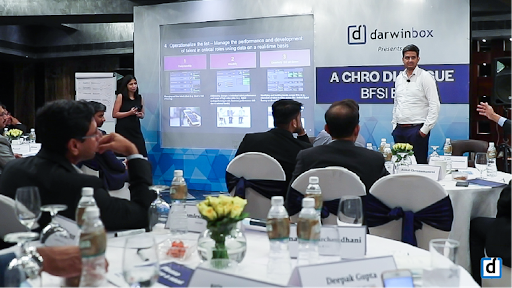
Darwinbox brought together CHROs from leading organizations to work through this problem, with McKinsey & Company as knowledge partners anchoring the discussion with real case studies. The room had no shortage of opinions, and the insights that came out of it were worth documenting.
This guide distills the best of our discussion, including how to identify genuinely value-driving roles, strategically redeploy talent, and create an impact-ready organization.
What is the Talent to Value Approach?
The Talent to Value Approach is a talent strategy that identifies the specific roles in an organization that drive the most business value, regardless of where they sit in the hierarchy.
Every role matters, but not equally. A small number of positions have an outsized impact on where the organization ends up. In fact, just 1–2% of critical roles will deliver 80%+ of absolute and incremental value over the next 3–5 years.
Conventional thinking ties the impact to seniority: the more senior the title, the larger the contribution. Talent to Value thinking challenges that assumption. It turns attention to the value a role supplies, rather than the place it holds on an org chart.
Key Talent Management Challenges Organizations Face
Talent management is regarded as the most challenging aspect and is assigned the highest priority by CEOs. In a survey conducted during the event, respondents stated the critical aspects of talent management as indicated below in decreasing order of priority:
Leadership Development & Succession Management
Talent Acquisition & Retention
Strategic Workforce Planning
Employee Engagement Organizational Design
Paradoxically, despite all the clarity, only 32% of the participant organizations said that they have high confidence in their strategy and vision towards effective talent management. It's a scenario that is most prevalent and needs to be addressed by the people function to drive maximum value from the organization's most critical resource – Talent!
"Just because someone is perfect for a role, one can't curtail their growth opportunities. If they are suited for something better, we must move them there and find a person to map the old role. Ring-fencing people does not work; they may have the skill sets required for one role, but they also have to be enabled to move into a role where they can add more value. This is how organizations can link talent to value." Anant Kasibhatla, Expert Engagement Manager, McKinsey & Company
Strategic Human Capital Reallocation
Research says organizations with >49% of their financial capital being reallocated generate 2 times the return as compared to their dormant counterparts. It seems only intuitive to apply the same principle to the Human Capital space. The CHRO must lead initiatives to ensure mobility of talent and capabilities, which are central to every mission-critical project of the organization.
Critical Role Identification: Do's and Don'ts
Most organizations default to org charts and job titles when identifying critical roles. That's usually where the process goes wrong. The roles that actually move the business forward don't always sit at the top, and finding them requires a different lens entirely.
| Focus On | And Not On |
|---|---|
| Value drivers that shape the next 3–5 year strategy | Where a role sits in the hierarchy today |
| Roles spread across the full value chain | Only the visible, front-end business roles |
| New roles and capabilities the organization needs to get where it's going | Roles that exist simply because they always have |
| The role itself and what it delivers | Who happens to be sitting in it right now |
| Freeing top performers to move where they create more value | Keeping people locked in roles they've outgrown |
| Building succession depth for roles that matter most | Assuming the current role-holder is the only option |
| Actively moving talent to where the business needs it | Treating people like fixed assets on a balance sheet |
Measuring the Gains
"Talent to value is all about how we develop and manage people across levels, who drive value creation for our organization. This way we create engagement, provide challenge and build retention of these people. The culture shifts towards increasingly talking about value and the people who deliver that. Top talent is no longer linked to the levels within an organization; it is an integrated list of the most value-adding role-holders across the spectrum." Anant Kasibhatla, Expert Engagement Manager, McKinsey & Company
As a result of its non-intuitive, impactful insights, the talent to value approach allows organizations to achieve value through:
Heightened strategic and role clarity
Redesign of org structure for value
Surgically targeted cultural interventions
Assigning stakeholders to each element of the strategy
Ensuring leadership fit & identifying successors for a role
For more such insights from CHRO's of leading organisations like Bajaj Finserv, SBI Life, Reliance Capital, Tata Capital, Kotak Life & General, Karvy, Bharti Axa Life & General, etc. Download the complete docket of the second edition of Darwinbox's 'CHRO Dialogue' on 'Excellence in BFSI through Talent and Technology', click here.
Conclusion
Hierarchy tells you who has authority. It doesn't tell you who drives value. That gap is exactly what the talent to value approach is designed to close. Organizations that take it seriously come away with cleaner role clarity, more purposeful talent moves, and a workforce that's pointed in the same direction as the business.
Darwinbox helps make that shift operational, from pinpointing critical roles to managing talent movement across the organization. Schedule a demo to see it in action.
References
FAQs
What is the talent to value strategy?
Talent to value strategy is a deliberate move away from org charts and titles toward the roles that actually drive business outcomes. The core idea is simple: put your best people where the work matters most, not just where the level is highest.
What is the talent to value framework?
A talent to value framework is a structured way to find the 1–2% of roles responsible for 80%+ of organizational value. Then build hiring, development, and succession decisions around those roles instead of around the hierarchy sitting above them.
Do talent-to-value approaches actually work?
Organizations that actively reallocate talent the same way they move financial capital generate roughly twice the returns of those that don't. The talent to value framework works. Getting internal buy-in to act on what it reveals is usually the harder problem.
What is the difference between talent to value and traditional talent management?
Traditional talent management follows the ladder: seniority, title, tenure. Talent to value ignores all of that and asks one question: which roles create the most impact? The answer rarely looks like the org chart.
What are the common mistakes organizations make when identifying critical roles?
One of the most common mistakes that organizations make is thinking visibility is the same as value. Senior and client-facing roles get flagged as critical almost automatically. The roles deeper in the value chain, where a lot of the actual execution happens, tend to get skipped. That's usually where the real gaps are.