Human resources (HR) is changing due to the emergence of agentic AI. Agentic AI enables systems to operate independently, helping organizations streamline recruiting, onboarding, and workforce management. Uncertainty and excitement, however, go hand in hand. The question on the minds of many HR leaders is What can agentic AI do? Where does it fall short? And why is it necessary for the future of work?
This article critically explores agentic AI’s role in HR—its potential, limitations, and how to use it strategically and responsibly.
The Evolution of AI in HR
Earlier, AI in HR mainly focused on automating simple administrative tasks such as payroll processing, time tracking, and generating routine reports. However, the purpose of AI has evolved far beyond basic automation. Today, HR teams are beginning to use AI-driven agents that proactively support talent management, helping identify workforce needs, predict engagement levels, and suggest succession-planning strategies.
This marks a major shift from reactive automation to proactive intelligence, where AI tools no longer just follow commands but actively assist in strategic decision-making. As a result, HR operations are being reshaped — strategic planning, ethical governance, and human-AI collaboration now take center stage over repetitive, manual processes.
Download free [e-book] How Agentic AI is Transforming HR
Understanding Agentic AI in HR
Agentic AI denotes AI that can act independently. As opposed to traditional AI applications, where humans need to issue commands to the system to carry out specific actions, agentic AI can analyze the environment, make decisions, and take actions about predetermined aims of the system.
In HR, it implies AI systems that can:
Search and filter applications (agentic AI in recruiting)
Arrange interviews and orientation.
Track employee activity and work.
Recommend learning, upskilling, and succession plans.
Being proactive instead of reactive, agentic AI in recruiting and other HR functions enables HR departments to concentrate on strategy and employee relationships instead of tedious administrative exercises.
Understanding the Agentic Workforce
Integrative partnerships between autonomous AI agents and human employees are adopting the concept of an agentic workforce. These agentic employees collaborate with human beings and are engaged in tasks requiring identifying patterns, analyzing data, and making proactive decisions.
The major defining features of an agentic workforce include:
The use of artificial intelligence and collaboration between AI agents and human employees.
Increased performance without losing human judgment.
Constant learning and adjustment of the information about the workforce.
Predictions lead HR activities.
By adopting an agentic workforce, organizations can attain optimal productivity and maintain fairness, accountability, and trust in the workforce.
Basic Capabilities of Agentic AI
The agentic AI presents three radical capabilities in HR:
Autonomy
These systems are self-governing, and thus, they make their decisions by following established patterns and their set goals. For example, AI can automatically shortlist candidates without human participation, simplifying the recruitment procedures.
Adaptability
The agentic AI adapts to the new information and modifies its strategy with time. It can rearrange interviews depending on availability changes or adjust onboarding programs depending on employee profiles.
Proactivity
Instead of waiting to be told what to do, agentic AI acts. For Example, it can suggest onboarding training to a new employee as soon as they have joined or indicate possible engagement issues in real time.
These capabilities allow the HR team to foresee needs and enable informed decision-making.
Why Human Oversight is still necessary
Although agentic AI is more efficient and accurate, it is essential to be cautious of unintended consequences, and human control is necessary. Wholly autonomous systems can:
Enforce Biases: In recruiting or promotions, automate already held biases.
Generating Opacity: Make opaque decisions that are not understandable by employees.
Decrease Accountability: Eliminate accountability in case AI decisions are not managed.
Darwin Box focuses on the concept of Human-in-the-Loop (HITL) practices. The AI agents are used to give recommendations, but ultimate decisions are made by the HR professionals, which is very fair, transparent, and trustworthy.
Integration with Existing HR Systems
When it is well integrated with HRMS platforms, agentic AI can be the best. Darwin Box ensures that AI agents are in collaboration with the existing systems to:
Automate the hiring and management of new employees.
Enhance workforce analytics and planning.
Improve employee satisfaction and experience.
Such integration would make AI consistently supplement human decisions without redundancy and operational pressure.
Benefits of Agentic AI in HR
By 2025, implementing agentic AI offers measurable benefits:
Recruiting Efficiency: AI agents speed up the sourcing and screening of candidates and implement them.
Proactive Workforce Planning: Systems predict talent, succession, and training requirements.
Better employee experience: Personalised onboarding, adaptive learning, and real-time feedback. The personalized onboarding is made, the learning paths are developed, and the performance feedback is perceived as the reason to interact and be retained.
Data-Driven Insights: AI uncovers trends and insights available to humans to enhance workforce decision-making.
Darwin Box helps organizations to take advantage of these benefits without losing human control and develop a smarter, ethical, and adaptable workforce.
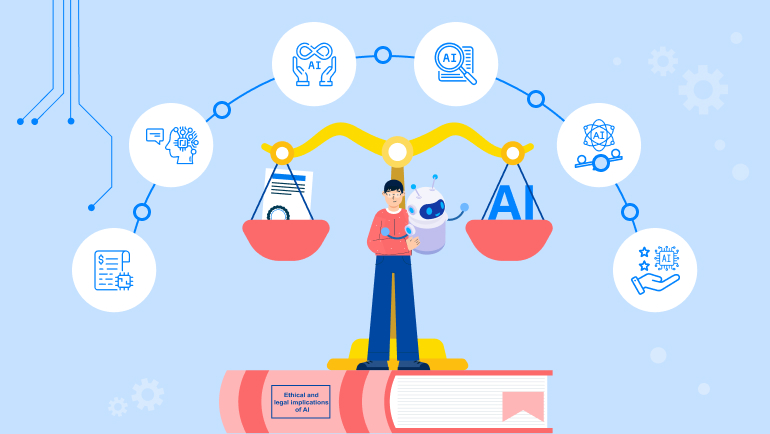
Ethics Implications of the agentic AI
The ethical implications of the use of agentic AI must be considered responsible:
Privacy: AI will manage confidential information about employees, such as salaries, health information.
Prejudice and Equity: The systems informed by past data may reinforce the present inequities.
Openness: Workers must know how the AI-based suggestion is made.
Inclusivity: Ensure AI systems are inclusive and prevent discriminatory outcomes.
Darwin Box incorporates ethical AI structures to ensure trust and adherence to all HR procedures.
Challenges in the Balance between Autonomy and Oversight
Although agentic AI brings high benefits, HR leaders must avoid risks. The summary of the main challenges and the proposed mitigation strategies is presented below:
| Challenge | Description | Mitigation Strategy |
|---|---|---|
| Data Privacy | AI works with sensitive information of workers, such as payments, performance, and personal data. | Data encryption, limited access, compliance with the GDPR/CCPA, and regular audits. |
| Algorithmic Bias | Artificial intelligence may be skewed in the historical information because it affects hiring, promotions, or employment. | Audit models utilize different datasets, offer equitable checks, and make use of diverse datasets. |
| Transparency | The AI decisions can pose a threat of confusing the employees, which leads to mistrust. | Use explainable AI dashboards, provide clear decision summaries. |
| Accountability | The responsibility of the AI-based outcomes can be arbitrary. | Hand over the critical decisions to human analysis and establish the governance roles. |
| Ethical Risks | Robotic AI may lead to unfair, inaccurate, or unethical outcomes. | Assemble ethics committees, conduct constant monitoring, and conduct impact evaluation. |
| Employee Distrust | The overuse of AI can cause employees to feel like aliens or spies. | Be human, open in AI practices, and create a conversation. |
The effective administration and efficient regulation can ensure that AI autonomy advances instead of degrading HR activities.
Applications of Agentic AI Strategy
Agentic AI extends beyond recruitment. Key applications include:
Onboarding & Learning: Individual training and adaptive learning of employees.
Performance & Engagement: Manage engagement and skills gaps proactively.
Workforce Planning and Analytics: Future Information on hiring, succession, and reskilling.
Employee Experience Management: Intelligent AI-prepared insights to enhance engagement, productivity, and satisfaction.
Darwin Box helps organizations responsibly combine these applications to provide a balanced agentic workforce by combining human intelligence and AI efficiency.
Future of Work Agentic Artificial Intelligence
The emergence of agentic employees indicates a greater change in the workforce dynamics. HR teams will guide hybrid ecosystems of humans and intelligent AI agents. This is a shifting environment that requires:
New AI governance and oversight skills.
Constant learning and changing procedures.
Systems of AI-based workforce ethics.
Through Darwin Box, the companies can work around this shift and prepare their employees to operate in a world where humans and AI work harmoniously together.
Conclusion
HR agentic AI is potentially transformative, but it must be balanced between automation and human intervention to succeed. By reducing the number of hype, acknowledging the actual capabilities and constraints, and setting up organized governance, HR leaders can move forward. Here are a few options:
Improve the efficiency of recruiting.
Enhance employee experience.
Informed decisions in the workforce based on data.
Be trustworthy, transparent, and accountable.
Darwin Box gives the means to leverage agentic AI in the recruitment, workforce planning, and employee engagement to enable HR teams to make smarter, quicker, and ethical decisions.
Download free [e-book] How Agentic AI is Transforming HR