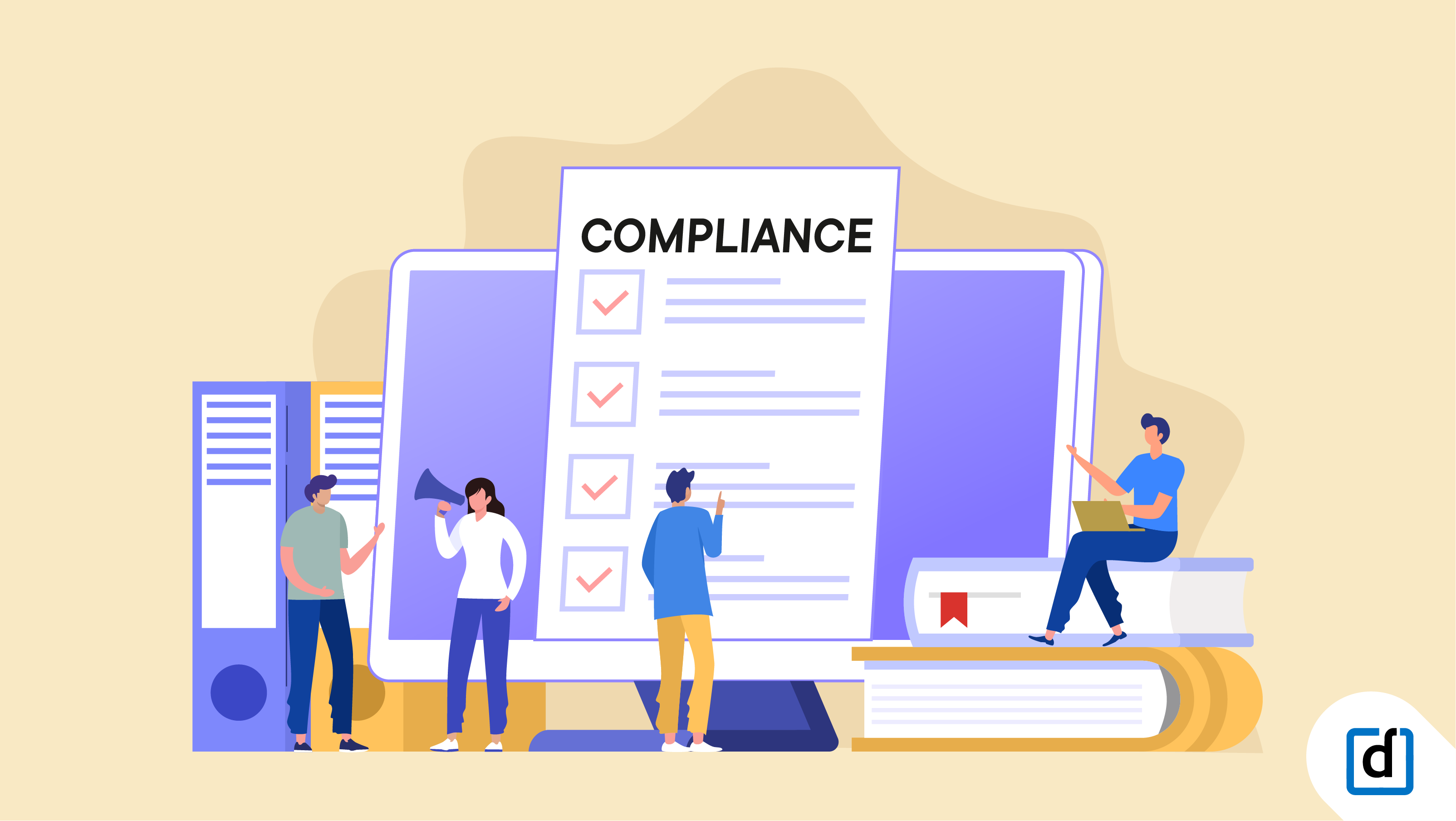
New York's regulatory landscape is complicated by design.
Firms based here don't merely respond to federal regulations. They navigate a multi-layered legal framework: city-level mandates, state mandates with local carve-outs, and changing federal norms all piled on top of one another.
From pay transparency to predictive scheduling, even the best-intentioned legislation can become compliance burdens when not tailored to NYC's specific legal requirements.
Compliance issues are an enterprise risk. A classification mistake, an old leave policy, or a manager's misperception of city-based rights can lead to audits, legal risks, or worse, credibility loss. Compliance has grown to a strategic operating system, rather than a downstream function.
Progressive HR teams in NYC must integrate structural agility into policy management. Governance localization without system fragmentation is the need of the hour. This can be achieved by applying technology intelligently, while leaving people responsible for judgment.
When compliance becomes traceable and manager-approved, it ceases to be a burden and begins to be a differentiator.
The Compliance Stack – Layered Mandates in New York
New York's compliance landscape is multi-layered, asymmetrical, and rapidly changing. CHROs need to navigate federal, state, and municipal legal requirements. The layers frequently overlap or branch out, producing interpretive complexity and enforcement risk.
NYC Pay Transparency Law (effective 1 November 2022)
New York City requires any employment ad containing internal promotions or transfers for positions worked in the city's five boroughs to state a good-faith salary range, including a minimum and a maximum. The trigger applies to employers with four or more employees or at least one domestic worker. Failure to comply could lead to enforcement by the NYC Commission on Human Rights.
Potential Future Pay Data Legislation
A NYC bill pending would mandate local employers with 25 or more employees to report yearly demographic-level pay information (e.g., race, gender) to the city. Though not yet enacted as law, it indicates a legislative trend toward transparency of pay equity.
Paid Prenatal Personal Leave (state-wide effective 1 January 2025)
New York State will mandate that all private employers, both large and small, or full- and part-time, offer 20 hours of paid prenatal personal leave (PPPL) within every 52 weeks, aside from regular paid sick leave. Leave must be used in hourly units and does not accrue or necessitate medical certification; it is flexible and job-protected. Up to 2 July 2025, New York City's Earned Safe and Sick Time Act formally incorporates PPPL requirements into city leave policies.
COVID Specific Sick Leave Expiration (expires 31 July 2025)
Although pandemic-period sick leave provisions run out on 31 July 2025, the wider state and city sick and safe leave systems are still completely in effect, mandating employers to provide up to 40 or 56 hours, depending on employee size, for health or safety grounds.
HR needs not only to contend with the sheer number of rules, but also inconsistencies between jurisdictions:
One law requires salary disclosure in NYC postings, while state and federal guidance might still allow ranges to be wider.
Some requirements (such as PPPL) are separate from state-based sick leave entitlements.
City-level expansions (such as DCWP changes to ESSTA) usually add to state requirements rather than substitute for them.
Structural transparency is key. Clear tracking, definable roles, and systemic intelligence and legal interpretation are essential to operational compliance and upholding employer integrity.
Compliance by Design – Beyond Reactive Policy Updates
Compliance remains viewed as an administrative or legal back-office activity in most organizations. When new mandates such as New York's Paid Prenatal Personal Leave or pay transparency disclosures exist, HR teams will react by revising one policy document or sending a company-wide email. Although well-meaning, this reaction builds risk on three fronts:
Missed Nuance: Local laws enacted at the city level could encompass interpretive distinctions, timelines of enforcement, or conditions of applicability that state or federal policies do not.
For instance, NYC's pay range disclosure regulations cover internal jobs and not only external job postings. A state-level interpretation would overlook this local requirement.
Version Confusion: Without version control, multiple teams can apply different interpretations of the same mandate. A central document gets updated, but downstream processes like manager onboarding checklists or job requisition templates are still using outdated versions. This causes inconsistent application and possible audit risks.
Employee Mistrust: When policies are not applied consistently or not effectively communicated, the employees see the organization as being unprepared or not transparent. In a compliance-driven city like New York, this undermines trust, especially among employee groups already attuned to equity and procedural justice.
Compliance Maturity Benchmarks – Structuring Legal Agility
Leading organizations move through defined phases to strengthen compliance operations from manual response to governed excellence. Below is a five-stage maturity model suitable for HR compliance in New York’s dense legal ecosystem.
| Maturity Stage | Key Attributes |
|---|---|
| Ad Hoc (Initial) | Response is reactive or audit-driven. Policy updates happen only after issues surface. Compliance is siloed. |
| Repeatable (Basic) | Policies exist, but are manual. Compliance is driven by checks, not integration. Accountability is unclear. |
| Defined (Standardised) | Governance is centralized. Version control used. Localisation done per mandate, but execution remains inconsistent. |
| Managed (Proactive) | Compliance embedded in HR workflows. Systems support automated updates and role-based enablement. |
| Optimized(Leading) | Continuous scanning, dashboards, predictive alerts. Managers are fluency-trained. Policy exceptions are tracked systematically. |
How to Apply This Model in the New York Context?
Organizations in the managed or optimized level of maturity usually revise principal compliance policies, such as PPPL or transparency of payments, within a short period.
Best-performing companies train 80-90% of frontline managers in NYC specifics, such as salary disclosures, classification rules, or risk, making common mistakes. Audit-ready companies keep dated approvals, exception logs, and policy revision history.
Self-assess: Are you Ad Hoc or Repeatable still, or have you moved on to the Managed level of maturity?
Find gaps: Identify lacking areas such as implementation speed, manager training coverage, localization processes, or quality of documentation.
Set KPIs: Target turnaround policy updates, manager fluency rates, internal compliance events. Tie compliance enhancement to your governance framework, aligning HR structures with these maturity indicators.
Why is this important to CHROs in New York?
With concurrent city, state, and federal regulations, the complexity of compliance is the standard rather than the exception. Measuring maturity provides C-level executives with transparency regarding operating risk, organizational preparedness, and regulatory responsiveness. When compliance is repeatable and embedded, not patchy or disparate, it is a source of organizational strength, rather than reputational risk.
Manager Enablement for Frontline Compliance
Even with robust central compliance frameworks, risk arises when ordinary leaders such as HRBPs and line managers misuse or misinterpret rules.
Misclassification Risks: Remote workers who work outside New York City might be misclassified since they report to NYC teams. This is in spite of NY State's active enforcement through a Joint Enforcement Task Force focused on misclassification complaints across agencies.
Salary Transparency Blunders: Employers occasionally, through hiring platforms, have advertised pay ranges that narrowly avoid the minimum-to-maximum guideline, inviting enforcement action.
Frontline confusion, despite policy papers having been circulated, can put organizations at risk of enforcement by the NYC Commission on Human Rights. Fines may be more than $ 250,000 for unresolved or repeated violations.
Enablement Tools Over Enforcement
Instead of solely trusting in rules and audits, successful CHROs prepare their managers with actionable tools that facilitate good faith, accurate compliance.
Scenario-Based Training
Interactive modules help with real-time use cases:
Remote employee hire working in NYC: manager needs to know if pay transparency is an issue.
Managing flexible leave notifications for PPPL or ESSTA benefits.
Bring on board a re-transferred employee, and have internal promotion job postings include compliant salary ranges.
These simulations emphasize comprehension of why the regulations are in place, not simply what they stipulate.
Decision Trees and Flowcharts
Step-by-step manager job aids help manage workflow:
If location = NYC or work is to be done there → then the salary range in the advertisement is required; no? Then send for legal review.
If employee status invokes classification uncertainty → consult task force guidelines and HRBP.
These applications eliminate guesswork and prevent misclassification, termination mistakes, or reopening of previous postings.
AI-Powered FAQ Portals
Internal knowledge robots or intelligent Q&A systems can be made available to managers and HRBPs:
Queries such as "Do I have to mention a salary range if the work is remote but across states?" receive accurate, jurisdictionally sensitive responses.
City vs. state leave differences are explained through role-based answers. Role-based access also makes the appropriate compliance questions emerge in hiring, onboarding, or employee relations workflows.
Managerial Fluency Generates Compliance Culture
Since managers understand why a rule is in place, not just what it says, they speak up for compliance rather than thinking of it as red tape. They turn into frontline advocates, not points of contention.
Throughout New York's shifting landscape of law, frontline clarity is crucial. Integrate compliance tools into managers' habits, equip them with scenario-based training, and don't count solely on enforcement to drive compliance.
Tech as Enabler For Compliance
Technology is a crucial compliance partner in New York's rapidly changing regulatory landscape. However, it should enable a robust governance structure and not overwhelm compliance implementation.
What Modern Compliance Platforms Should Do
Comprehensive HR management platforms such as Darwinbox contain compliance modules that adapt based on the latest legislative changes. Some of the features you need in a modern compliance platform are:
| Feature | Compliance Impact |
|---|---|
| Editable Templates | Enable legal, HR, and ops teams to make speedy, consistent changes to policy wording whenever regulations change, ensuring policies remain compliant (e.g., PPPL, NYC salary transparency) |
| Trigger Alerts When Laws Change | Provide real-time updates when NYC or state regulations shift, allowing stakeholders to respond quickly and stay aligned with new mandates |
| Audit-Ready Tracking | Maintain timestamped version control, approval flows tied to executives/legal owners, and track exceptions or manager-level deviations to ensure audit readiness |
These traits allow organizations to demonstrate regulatory compliance at NYC audits or company-wide reviews, converting evidence of rigor into a culture of conformity.
What Tech Can't Solve
While tech tools are imperative, they are not suitable for all uses. In some scenarios, legal and human expertise is mandatory:
Interpretation & Grey Zone Judgments
Even the most intelligent system cannot interpret nuanced policy boundaries. Grey area judgments like whether or not a remote worker falls under NYC jurisdiction, or how to treat demographic pay reporting if passed, continue to rely on well-structured governance and local know-how.
These interpretive duties find their place squarely in the Localization Engine and Execution Layer of the compliance model, where frontline managers and legal, HR policy leads work together on localization and real-world implementation.
Augment Governance with Technology
By combining modular, flexible compliance platforms into a common governance operating model:
Legal alignment becomes transparent.
Mandate updates are actionable.
Policy ownership is collaborative.
In a city where regulatory shift is the norm, CHROs need to see technology as amplification, not a substitute for human judgment and structural precision.
Takeaway
Compliance isn't a checkbox in New York's heavily regulated landscape. Fixed policy and reactive revisions no longer suffice.
Organizations need to embed compliance into their operating model with transparent roles, localization frameworks, and accountability beyond HR. C-suite leaders must prioritize cross-functional ownership, enabling HRBPs and managers to receive scenario-based training and access to NYC-specific policy tools.
Technology may automate triggers, documentation, and audits, but interpretation and context are still human-driven. Speed, accuracy, and consistency now characterize compliance maturity. The most resilient businesses measure not only whether policies are in place, but how quickly they're revised, how well they're known, and how assuredly managers implement them.
By addressing compliance as a process that can be repeated and not a legal fire drill, businesses lower their risk, foster employee trust, and outsmart changing mandates. In a metropolis where legislation changes more quickly than playbooks, legal resilience comes from structural malleability rather than quick fixes or stagnant rulebooks.
Audit your NYC compliance maturity, identify gaps in manager fluency, and implement tech-enabled governance to move from reactive updates to proactive risk management.