Recruitment teams spend hours sorting resumes, scheduling interviews, and answering candidate questions. These tasks consume time that professionals could allocate to relationship building and hiring decisions that advance business objectives. AI recruitment agents now handle these repetitive workflows automatically. In large enterprises, they screen thousands of applications, match roles using past data, and schedule interviews with little human input.
This raises a practical question: What happens to the recruiter's job when algorithms take over routine work? Here is the answer: Recruiters do not lose their jobs. Their responsibilities have just changed. They focus on relationship-building and strategic hiring decisions. This blog covers how AI handles routine tasks, transforms recruiters into strategic advisors, improves candidate experience, and supports data-driven hiring decisions.
Download free [e-book] How Agentic AI is Transforming HR
What are AI Recruitment Agents?
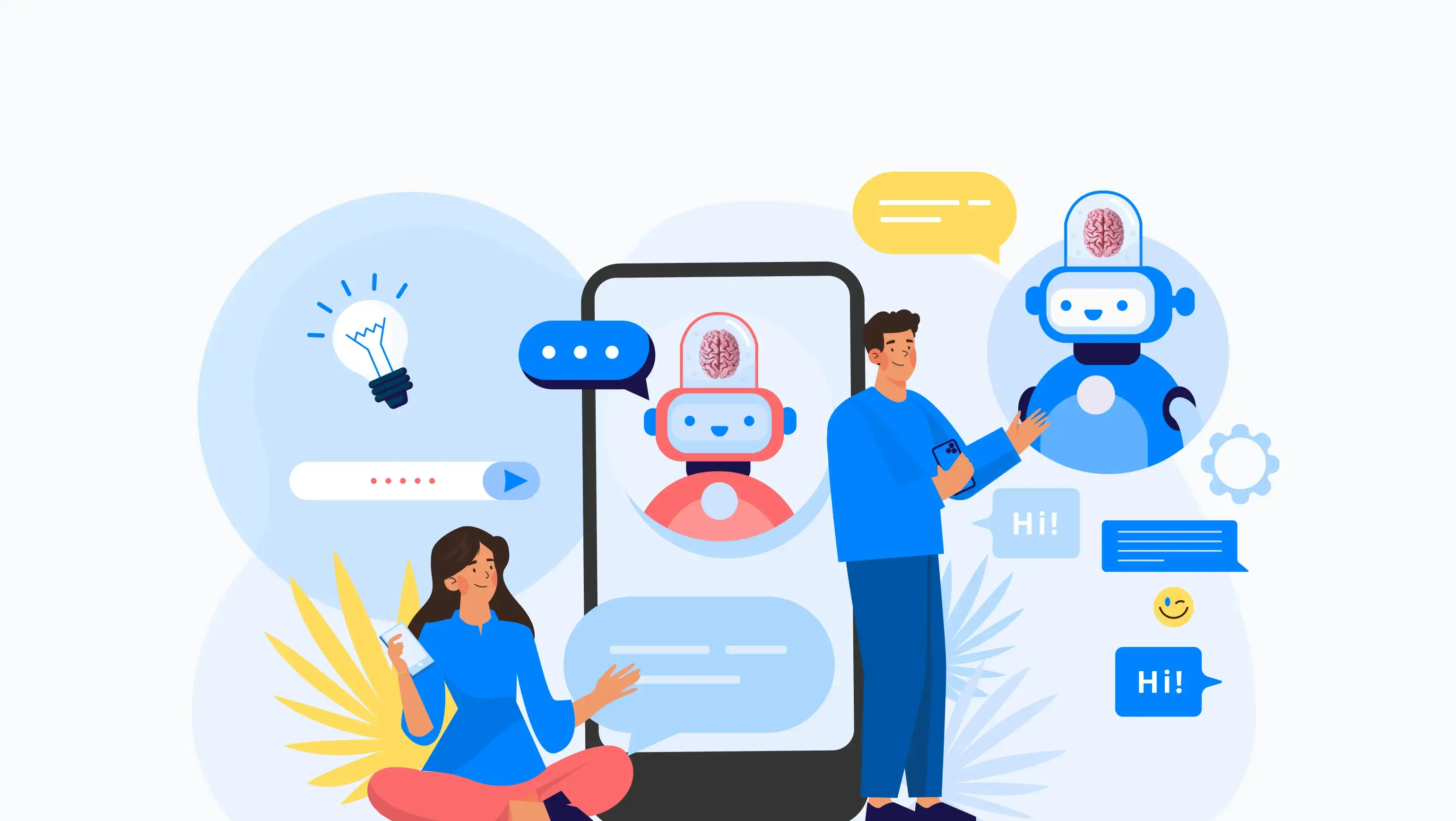
AI recruitment agents are software systems that autonomously perform end-to-end hiring functions such as screening, matching, and scheduling. Unlike basic automation tools that follow fixed rules, these systems learn from past hiring decisions and adapt their recommendations based on patterns in the data.
Functions of AI Recruitment Agents
Automated Resume Screening: Software scans applications and identifies qualifications, experience levels, and keywords that match job requirements. Manual review is reduced, as the system completes in minutes what once took hours.
Candidate Matching Through Predictive Analytics: Algorithms compare candidate profiles against job specifications and historical hiring outcomes. The system calculates fit scores and ranks applicants based on predicted success probability. This reduces human bias or inconsistency in early selection.
Preliminary Assessment Delivery: Chatbots conduct initial screening conversations with standardized questions and record responses. This ensures consistent questioning and maintains fairness. The process runs continuously, giving candidates immediate engagement without waiting for business hours.
Interview Scheduling Automation: Software integrates with calendar systems to propose meeting times, send confirmations, and handle rescheduling requests without human coordination. The back-and-forth emails that normally consume recruiter time happen automatically.
Agentic AI for recruiting learns from data instead of following fixed instructions. Traditional tools need manual programming for each step, such as sending emails or filtering unqualified candidates. Agentic AI studies past outcomes, updates its methods, and improves how it ranks and recommends candidates over time.
Current Challenges Recruiters Face
Hiring professionals face obstacles that consume time and reduce selection quality. Finding qualified candidates has become harder, creating pressure on recruitment teams to process more applications while maintaining high standards. The primary obstacles in traditional recruitment are:
Overwhelming Application Volumes: Recruiters spend significant time reviewing candidates for each role. When positions receive hundreds of applications, this creates a bottleneck at the initial screening stage that slows the entire hiring process.
Manual Shortlisting Errors: Recruiters spend limited seconds scanning through resumes to find a fit. This rapid assessment increases the likelihood of overlooking qualified candidates or making inaccurate judgments based on incomplete information.
Time-Intensive Administrative Tasks: Recruiters spend many hours screening resumes for each hire. Additional tasks like scheduling interviews, sending communications, and collecting feedback consume more time. This leaves limited capacity for strategic hiring priorities.
Unconscious Bias in Decision Making: Personal experiences and assumptions shape candidate evaluation, even when recruiters attempt to remain objective. This can exclude qualified individuals from consideration.
These challenges directly affect metrics such as time-to-hire and cost-per-hire. Process improvements become a priority for human resources departments facing these constraints.
How AI Recruitment Agents are Changing Recruitment Roles
Agentic AI in recruiting transforms the recruiter's function from administrative coordinator to strategic talent advisor. The technology handles data processing and routine communications, freeing professionals to focus on relationship building and cultural assessment. The fundamental changes in recruiter responsibilities include:
Task Automation for Time Savings: Machine learning algorithms check thousands of applications in seconds. Days of manual resume review vanish, allowing recruiters to focus their time on candidate engagement and collaboration with hiring managers.
Data Driven Hiring Decisions: AI systems provide measurable candidate fit scores based on historical hiring outcomes and job requirement matching. Recruiters access objective data points to support their recommendations. This reduces reliance on subjective impressions during initial screening phases.
Accelerated Candidate Experience: Automated chatbots respond to candidate inquiries immediately, regardless of time zone or business hours. Status updates and interview confirmations reach applicants faster. Studies by Gartner show that organisations using automated recruitment tools improve candidate experience scores by up to 20%.
Diversity and Inclusion Support: Algorithms can blind certain demographic information during initial screening stages. Evaluation focuses on skills and experience rather than personal characteristics. This technical approach addresses one source of unconscious bias in the hiring process.
The agentic workforce concept emerges as AI handles transactional work while humans manage exceptions, build relationships, and make final hiring decisions. Machines cannot assess cultural alignment or communication style; these remain human responsibilities.
Benefits of Integrating AI Recruitment Agents
Organizations implementing AI agents for human resources see measurable improvements in hiring metrics and operational costs.
Reduced Time to Hire: AI cuts time to hire by up to 30% in some organizations. Faster hiring cycles mean open positions cost the organization less in lost productivity and recruitment expenses.
Enhanced Matching Accuracy: Organizations experience a substantial reduction in screening time with an improvement in candidate quality scores. Better initial matches result in fewer interview rounds with unsuitable candidates.
Decreased Cost: AI-powered hiring tools reduce recruitment costs significantly. Companies report cost-per-hire reductions of around 30–40% after adopting these systems. Lower expenses come from decreased time spent on manual processes and improved efficiency in moving candidates through the hiring pipeline.
Focused Strategic Planning: When recruiters spend less time on administrative tasks, they focus on workforce planning, talent pipeline development, and hiring manager relationships. This enables proactive talent strategies rather than reactive position filling.
Agentic AI in HR provides analytics dashboards that track recruitment funnel metrics, source effectiveness, and hiring outcome patterns. These insights inform budget allocation and process improvement decisions. Organizations gain visibility into what works and what doesn't in their hiring approach.
Strategies for Recruiters to Adapt
Professional adaptation to agentic AI use cases requires skill development and workflow redesign. Recruiters must position themselves as strategic partners who leverage technology rather than compete with it.
Continuous Learning of AI Tools
Recruiters need to understand how AI systems make recommendations, what data inputs determine outputs, and how to interpret confidence scores or matching percentages. Training programs focused on AI literacy help professionals use tools effectively rather than blindly accepting algorithmic suggestions. This knowledge separates strategic advisors from task executors.
Human AI Collaboration Models
Effective implementation assigns pattern recognition and data processing to AI while reserving relationship building, negotiation, and cultural assessment for human professionals. This division of labor maximizes the strengths of both contributors. Recruiters handle what machines cannot: emotional intelligence, cultural assessment, and candidate motivation evaluation.
Bias Monitoring Protocols
Regular review of AI recommendations for demographic patterns prevents discriminatory outcomes. Recruiters track which candidate types the system favors or eliminates and adjust parameters when disparities appear without business justification. These reviews help organisations maintain compliance with EEOC and AI transparency laws while reducing legal and reputational risk.
Proactive Talent Intelligence
AI analytics identify skill gaps, predict turnover risk, and forecast hiring needs based on business growth patterns. Recruiters use these insights to build talent pipelines before positions open. This reduces time to hire when needs arise and positions HR as a business partner.
Conclusion
AI recruitment agents fundamentally alter the recruiter's role by eliminating time-consuming administrative work and enabling focus on strategic talent decisions. The technology handles resume screening, candidate matching, and communication automation while human professionals provide judgment, relationship building, and cultural assessment that machines cannot replicate. Organizations implementing agentic AI in recruiting see reduced time to hire, lower costs, and improved candidate quality when they maintain appropriate human oversight and address algorithm bias concerns. The transformation requires recruiters to develop technical literacy, data interpretation skills, and workforce planning capabilities.
Get Darwinbox Agentic AI up and running today. Enhance recruitment, employee support, and HR operations with ease.
Download free [e-book] How Agentic AI is Transforming HR