TL;DR
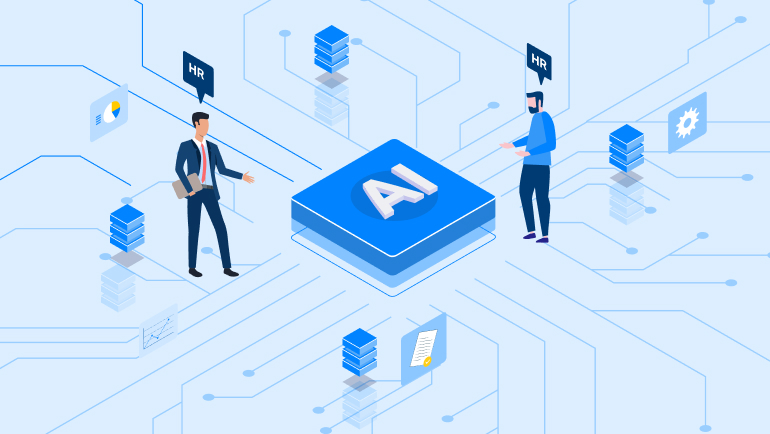
AI in HR analytics helps teams spot attrition risk, skill gaps, hiring issues, and pay gaps before they become costly problems.
It moves HR from past-focused reports to forward-looking insights that guide workforce planning and decision-making.
Enterprises use AI-driven HR analytics to improve retention, hire better candidates, forecast productivity, and maintain pay fairness.
Strong data governance, bias checks, and human oversight remain essential to ensure responsible use of AI in HR statistics.
Introduction
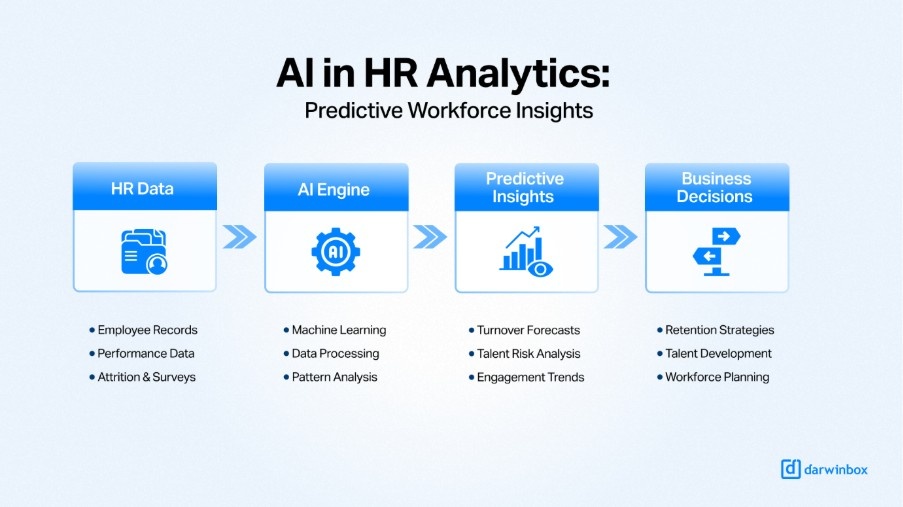
Enterprises generate vast amounts of workforce data across payroll, performance, engagement, recruiting, and collaboration platforms. Most of it goes underused. AI in HR analytics applies machine learning and advanced algorithms to that data to bring out predictive, prescriptive, and actionable insights that drive strategic decisions rather than simply inform them.
Traditional dashboards describe the past. They summarize historical metrics without diagnosing root causes or flagging risks that are still forming, which limits their strategic value. AI in HR analytics changes the function of reporting entirely, identifying trends as they develop, predicting outcomes before they materialize, and alerting teams to risks before escalation becomes unavoidable.
The cost of that reporting gap shows up in employee experience. McKinsey's HR Monitor 2025 found that roughly 36% of employees across Europe and the United States are dissatisfied with their current employer. Gen AI has reached scale in only a small number of HR departments, and most HR functions are still far from using the tools available to them. This article explains how AI-enabled HR analytics closes that gap by turning workforce data into decisions that move outcomes.
The Evolution of HR Analytics: From Reporting to Intelligence
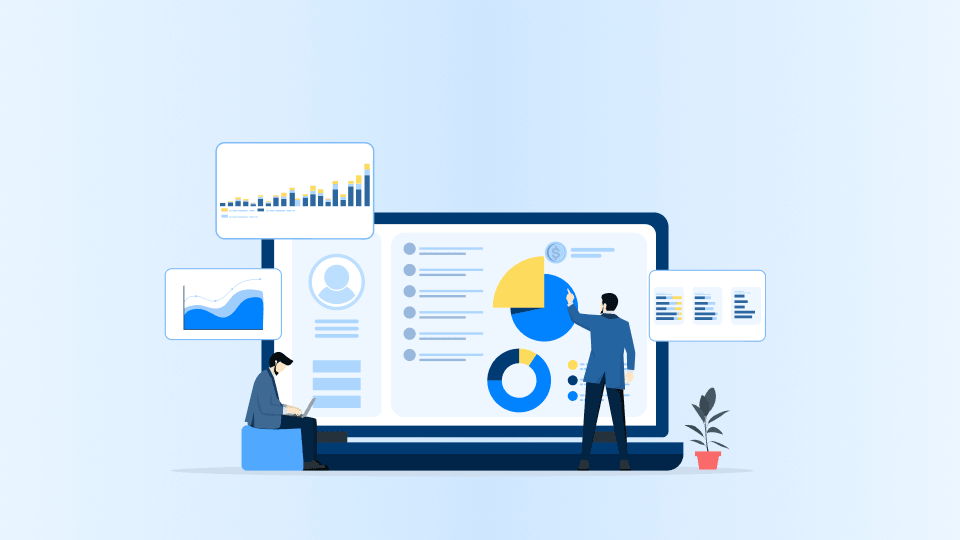
Early HR analytics consisted of descriptive metrics such as headcount, turnover rate, absenteeism, and cost per hire. These reports provided exposure, not insight. The analysis was manual, done in spreadsheets, and took a lot of time.
Predictive and prescriptive analytics are now crucial for organizations. Rather than asking ‘What happened?’ organizations are asking ‘What is going to happen?’ and ‘What should we do about it?’
AI-powered HR analytics recognizes and explains patterns in vast amounts of data that manual analyses and traditional solutions fail to detect.
The shift can be summarized as follows:
| Traditional HR Analytics | AI-Driven HR Analytics |
|---|---|
| Historical reporting | Predictive insights |
| Manual analysis | Automated pattern detection |
| Static dashboards | Real-time intelligence |
| Reactive decisions | Proactive workforce planning |
| Isolated data sets | Integrated, cross-functional data |
This progression is in line with the broader adoption of AI in HR by enterprises. The focus has shifted from operational reporting to smart decision support with a direct impact on workforce results.
Core Enterprise Applications of AI in HR Analytics
Enterprises already collect workforce data. What they lack is the ability to act on it before problems surface. AI in HR analytics delivers value in the following enterprise applications:
Predictive Attrition & Retention
Rapid attrition disrupts day-to-day operations, and turnover recruiting is both expensive and exhausting. Traditional exit data only accounts for explaining departures after they have happened.
AI-driven HR analytics constructs flight risk models based upon engagement scores, compensation trends, tenure data, promotion velocity, workload indicators, and even patterns of collaboration. These models can identify early warning signs ahead of resignation.
Business impact:
Decreased voluntary turnover as a result of such intervention
Cost-effective hiring and replacement
Higher workforce stability for key positions
SHRM's report states that employee replacement costs 50-200% of their annual salary. Even small retention improvements lead to quantifiable financial savings.
Skill Foresight and Workforce Planning
Firms find it hard to predict the skills they need and to scale up their workforce along with their plans for business growth.
AI-based models integrate past hiring trends, business growth predictions, market intelligence, and internal business information to analyze talent and skill availability. NLP processes the job descriptions and employees' data to determine emerging capability gaps in critical skills.
Business impact:
More reliable headcount planning
Understaffing and overstaffing are minimized
Education/reskilling investment utilization optimized
Talent strategy business objectives are tightly aligned
This allows for budgeting and prioritization of the most impactful skills development.
Recruitment & Talent Analytics
Some aspects of recruitment, like aspects contributing to a good hire, are decided based on limited performance feedback and hiring history, resulting in the quality of hire fluctuating.
AI models analyze historical candidate data, performance results, and source channels to forecast quality-of-hire. It analyzes which sourcing channels are providing the best "return on investment," in terms of high-quality candidates, and even highlights potential bias in screening decisions on recruitment procedures.
Business impact:
Enhanced ability to predict quality-of-hire
Superior source allocation and cost-per-hire reduction
Bias detection to ensure equal opportunities in hiring
Streamlined hiring process and shortened time-to-hire via automated pre-screening
These applications illustrate just how AI in HR statistics can increase both speed and fairness.
Productivity and Performance Insights
Performance reviews are biased and backward-looking by nature, and so are limited in predicting future behavior.
AI synthesizes information on how to complete a task, performance metrics, assessments from peers, participation in learning, and evaluations from supervisors to identify patterns that correlate with high performance. It also estimates the probability of goal attainment at the individual and team level, flagging performance risks early enough for managers to intervene before they affect outcomes.
Business impact:
Data-backed promotion decisions
Early identification of high-potential employees
Improved productivity forecasting
Targeted coaching interventions
This shifts the focus of performance management from assessment to ongoing improvement.
Compensation & Pay Equity Analysis
Pay equity across gender, ethnicity, and roles is difficult to maintain in complex, large enterprises with thousands of employees.
AI in HR statistics identifies outliers by pay bands, levels of tenure, performance ratings, and role groups. It brings to light unexplained compensation gaps and estimates future equity risks.
Business impact:
Reduced compliance risk
Increased transparency of pay structures
Proactive equity monitoring
Enhanced employer brand and trust
AI-powered anomaly detection reconciles pay decisions to help ensure they are fair and based on data.
How to Implement AI in HR Analytics
Based on EY's 2025 survey, 62% of large enterprises indicate data integration and governance as the biggest obstacles to scaling AI in HR analytics. Execution involves five areas of focus that require discipline:
Governance and Compliance
The AI applications contain sensitive employee data. Good governance models should cover:
Protection of data privacy and consent
Encryption and role-based control access
Alignment of regulation (e.g., GDPR vs local labour law)
Responsible AI principles
Enterprises have to maintain a log of how models are trained, what variables are used, and how predictions are applied. Transparency is the key to trust.
Unified HR Data Foundation
Isolated applications reduce the accuracy of predictions. The collected data on payroll, performance, engagement, and recruitment needs to be combined in an integrated ecosystem for maximum output.
An integrated HRMS module can help get rid of manual work control over that. Integration with other applications (Negative balance, Payroll, etc.) is also necessary for linking compensation trends with patterns of attrition and/or engagement.
In the absence of a cohesive data structure, AI models generate disjointed insights.
AI Literacy of HR Leaders
AI provides probability scores and confidence intervals rather than yes or no answers. HR leaders should:
Accurately interpret predictive risk scores
Know how reliable the AI model is
Avoid being over-reliant on automated results
Decisions are supported by AI; decision makers are not replaced by AI. The people analytics function needs to turn outputs into actionable strategies, and the insight needs to be meaningful.
Human Supervision
AI enhances human judgement, but it can’t replace human supervision. Escalation procedures should specify the following:
When a predictive output requires managerial review before action is taken
Who approves interventions
Who holds accountability for monitoring
Whether model-driven decisions are producing the intended outcomes
Automation bias, meaning blind trust in algorithmic outputs without applying human judgment, is a huge risk. Building structured oversight into the process separates responsible AI deployment from dangerous over-reliance on it.
Bias and Model Monitoring
AI models can inherit bias from the historical data they are trained on. Best practices to avoid bias are:
Systematic bias audits (within and across covariate demographics)
XAI (Explainable AI) frameworks to explain predictions
Model recalibration as workforce dynamics change
Ongoing monitoring guarantees fairness and accuracy in perpetuity
Successful execution requires not only technology, but also governance rigor and leader readiness.
The Future of AI in HR Analytics
AI in HR analytics is shifting from predictive report generation to integrated workforce transformation. Gartner’s 2025 strategic predictions also say that flattening the organization can be achieved by applying AI, which 20% of organizations are expected to do by 2026, while reducing traditional middle manager layers. This indicates increased confidence in AI decision intelligence in businesses.
Emerging capabilities include:
Real-time workforce dashboards driven by live data feeds
Generative AI summaries of engagement surveys and performance data
Conversational analytics interfaces for executive queries
Prescriptive advice on workforce reallocation
Instead of requesting reports from analysts, leaders can engage with AI systems to model workforce scenarios and get recommended courses of action.
AI-enabled HR analytics is evolving from predictive forecasting to prescriptive decision support. Leaders no longer need to request reports from analysts. They can query AI systems directly, model workforce scenarios in real time, and receive recommended courses of action before problems reach the point of escalation.
Conclusion
HR analytics is now part of predictive intelligence rather than only historical reporting. With AI, organizations are able to predict attrition, identify skills gaps, plan hiring, and assure pay equity with quantifiable rigor.
That change is a competitive advantage for enterprise HR teams. Those organizations that build unified data, strong governance, and AI literacy into an analytics strategy can make faster, more evidence-based decisions about the workforce.
An AI-powered HR platform such as Darwinbox demonstrates how integrated HR ecosystems can embed AI capabilities across recruitment, payroll, performance, and workforce planning.
The future of HR leadership is the team that treats workforce data not as a compliance or reporting requirement - but rather as mission-critical strategic intelligence.
External Sources:
FAQs
How to Use AI in HR Analytics | Darwinbox
Meta Description: Learn how AI in HR analytics delivers predictive workforce insights. Enable smarter decisions and enterprise-wide talent optimization.
What is AI in HR analytics?
AI in HR analytics is the application of ML and statistical models to workforce data to predict outcomes and provide prescriptive insights for informing HR decisions beyond typical reporting.
What to look for in an AI-powered HR analytics?
Look for important factors like integration with other data sources, explainable AI techniques, compliance tools, bias monitoring, real-time dashboards, and integration with current HRMS and payroll software packages.
How is AI used in HR statistics?
AI in HR statistics uses sophisticated models to find patterns, predict trends, and identify outliers in workforce data, including risks of attrition, pay inequities, and the effectiveness of hiring.
What are the benefits of AI-driven HR analytics?
Advantages of AI-driven HR analytics include more proactive retention efforts, streamlined workforce planning, higher quality hires, more robust compliance monitoring, and more timely, data-driven decision-making at scale.
Can AI predict employee attrition?
AI models can predict the probability of attrition using historical trends and signals from the workforce. Although predictions are never certain, well-calibrated models dramatically increase the accuracy of early interventions over manual evaluations.