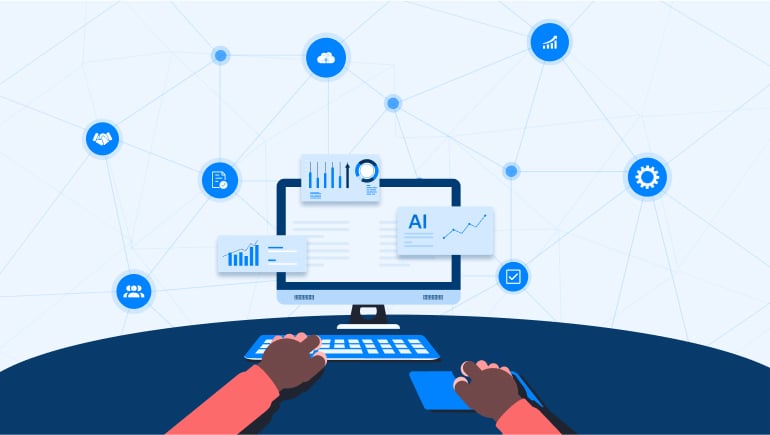
Context in AI HR Systems
Meaning & Definition
Context in AI HR Systems
In AI HR systems, context is the information an AI needs beyond the user's request to produce a correct, organization-specific answer or action: who is asking and what they are permitted to see, how the organization is actually configured, what is happening around the request, and the HR domain knowledge that explains why the rules exist. Without it the AI answers in general terms; with it, it answers for this company.
Context comes in three kinds. Systemic context is the configuration: grades, approval chains, leave policies, legal entities, pay structures. Organizational context is the operating reality: who reports to whom, what changed last quarter, which team is under pressure. Domain context is the reasoning behind the rules: why a transfer to a new country triggers specific compliance steps. The architectural question is where this lives. If it has to be assembled per request through API calls to systems that store data but not meaning, permissions and relationships get lost in transit. If it is represented natively in a form AI can reason over, every agent starts from the organization's actual state. Context is not the same as a model's context window (a token budget), and it is not volume; a structured map of relationships outperforms a larger pile of records. Darwinbox Cortex is the first HCM built on a context graph, which holds these three kinds of context as one living model.